

What Makes Dental Practice Trustworthy to AI Search Engines?
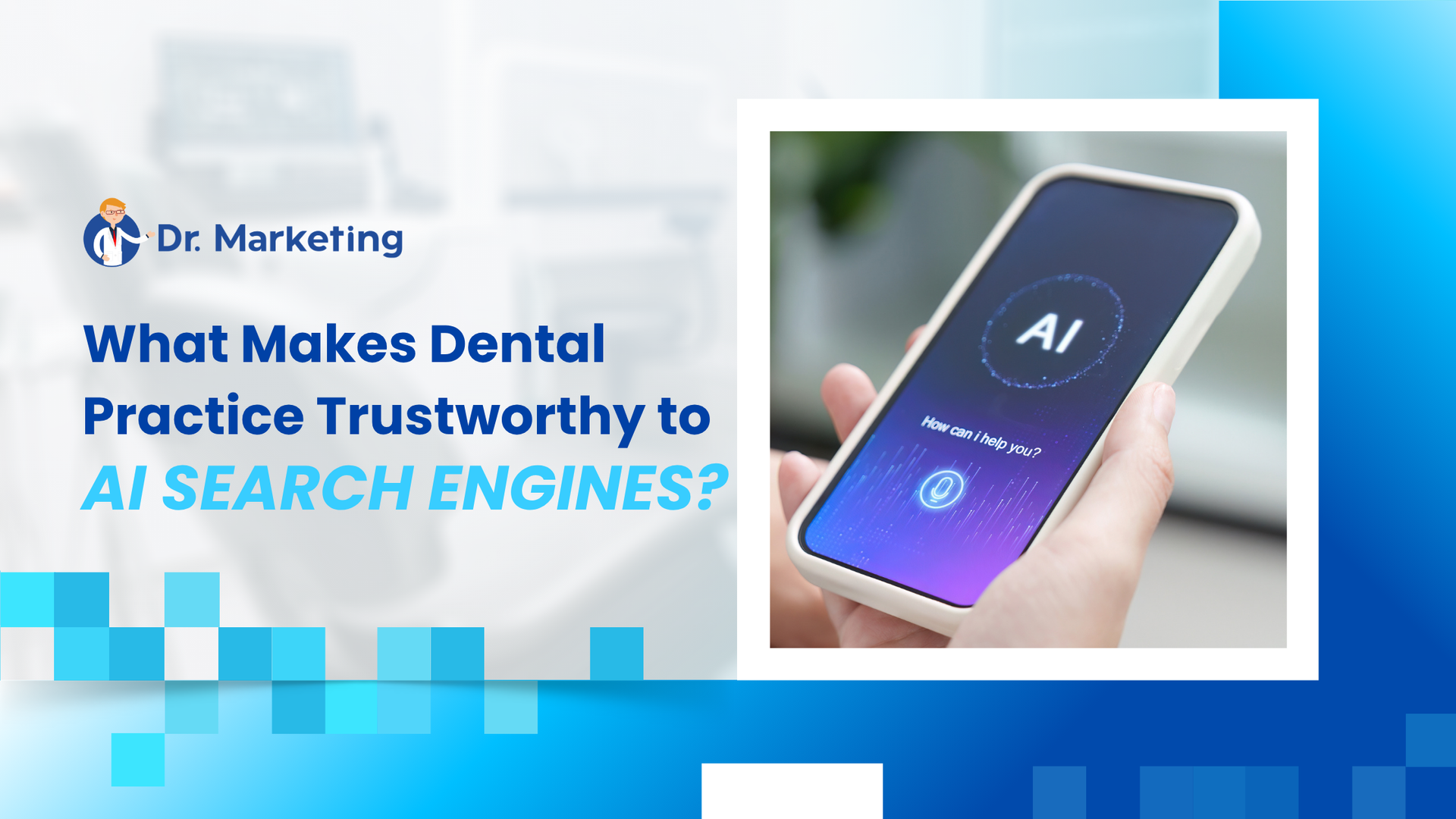
Source: Dr. Marketing
Patients are changing how they search for dental care. Instead of typing only “dentist near me,” they are asking detailed questions such as, “Who is a trusted implant dentist near me?” “Which dental office accepts emergency patients?” or “Where can I find a family dentist who treats anxious patients?”.
Google AI Overviews, AI Mode, ChatGPT, Gemini, Bing Copilot, and other generative search platforms may answer these questions by collecting information from websites, business profiles, directories, reviews, and other credible sources.
A dental practice appears trustworthy to AI search engines when its identity is consistent, its clinical content is accurate, its dentists and services are clearly documented, and its claims are supported by reputable third-party sources. Strong technical SEO, structured data, patient reviews, and current business information make that evidence easier for search systems to find and understand.
For dental practices, this means AI search optimization is not about adding a few new keywords. It requires building a clear, accurate, and verifiable digital presence.
How Do AI Search Engines Evaluate Dental Practice?

AI search engines do not trust a dental practice in the same way a patient does. Instead, they evaluate signals that help determine whether information is reliable enough to be used in an answer. Google explains that websites do not need special AI files or unique schema to appear in AI Overviews or AI Mode. The same foundational SEO practices remain important, including crawlable pages, people-first content, internal links, accurate structured data, and current Business Profile information.
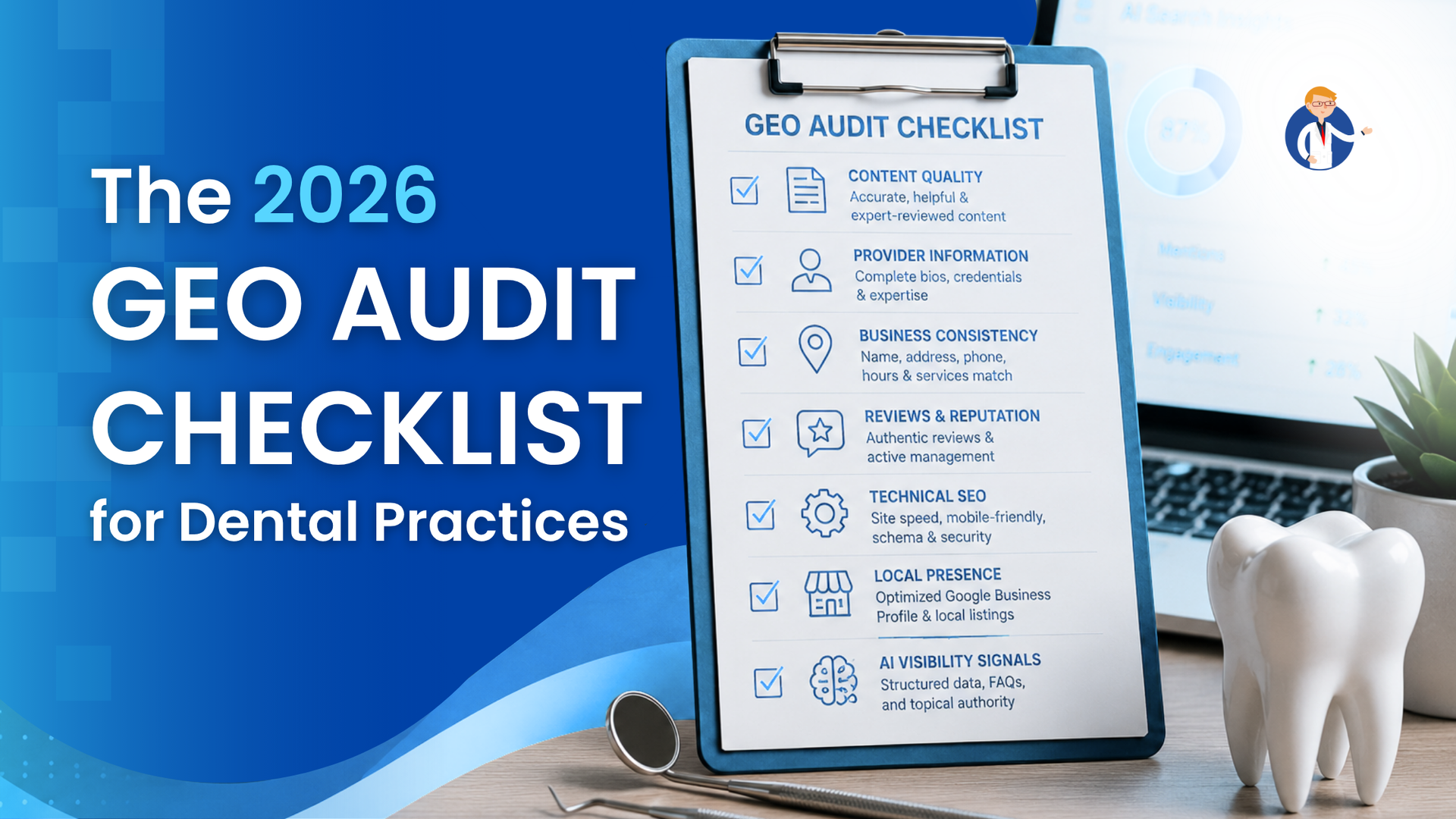
At our dental marketing agency, we organize these requirements into five core trust signals:
- Identity: Can search engines clearly identify the practice, dentists, locations, and contact information?
- Clinical credibility: Is the treatment information accurate, useful, transparent, and reviewed by a qualified professional?
- Consistency: Do the website, business profiles, directories, and social platforms communicate the same facts?
- Corroboration: Are the practice claims supported by reviews, professional profiles, memberships, citations, and other external sources?
- Accessibility: Can search engines crawl, index, interpret, and retrieve the information without technical obstacles?
A weakness in one area does not automatically remove a practice from AI search results. However, practices that support all five signals give search systems more reasons to consider their information dependable.
Can AI Search Engines Clearly Identify the Practice?
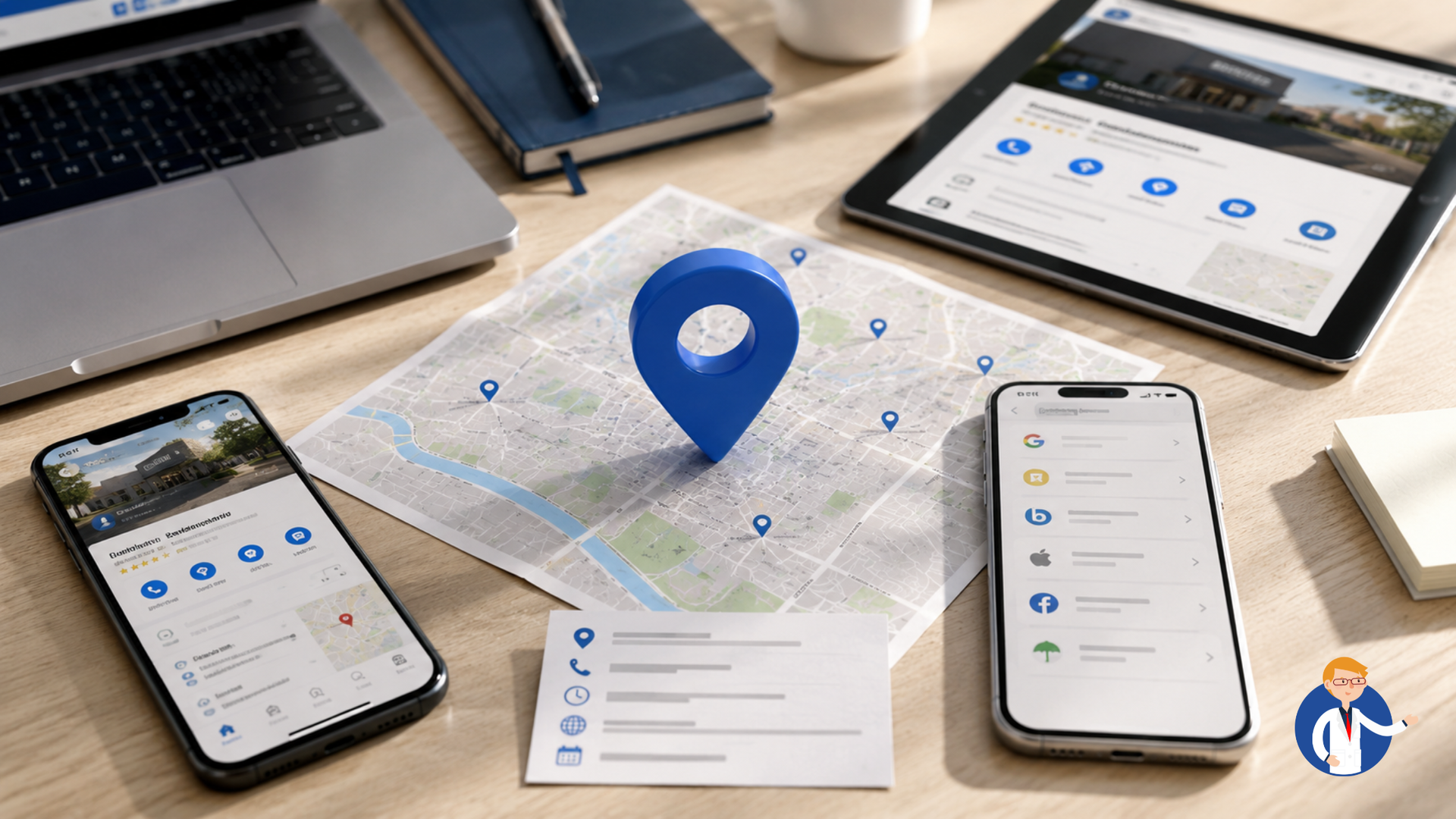
The first step is establishing dental practice as a recognizable real-world entity. The practice name, address, phone number, website, office hours, services, and provider information should remain consistent across the website, Google Business Profile, Bing Places, Apple Business Connect, social profiles, insurance directories, and local business listings.
During dental marketing audits, we frequently find former addresses, outdated office hours, duplicate profiles, inconsistent practice names, and providers who have left the office but remain listed online. These discrepancies can confuse patients and make it harder for search engines to connect multiple online mentions to one practice. A trustworthy practice identity should establish:
- Who provides the care: Each dentist should have an individual biography containing their full name, credentials, education, clinical interests, professional memberships, and role within the practice.
- Where care is provided: Every office should have an accurate address, phone number, hours, directions, and local service information. Multi-location groups should create a substantial page for each location.
- Which treatments are available: Important services should have dedicated pages rather than appearing only on a general list.
- Who the practice serves: The website should explain whether the office treats children, adults, families, seniors, emergency patients, or individuals with dental needs.
Clear entity information helps search systems understand exactly which practice should be associated with a service, provider, and location.
What Makes Dental Website Content Credible?

Dental content can influence healthcare decisions, so clinical accuracy and transparency are essential.
A thin service page that says, “We offer high-quality dental implants,” provides very little value. It does not explain what implants are, who may qualify, what the process involves, or why an examination is required. A credible treatment page should answer the questions patients ask before scheduling an appointment. Depending on the service, that may include:
- The dental problem the treatment is intended to address
- Common signs that a patient may need an evaluation
- How the dentist determines treatment suitability
- What patients can expect during the procedure
- Benefits, limitations, alternatives, and recovery considerations
- Why individual results and recommendations may vary
Content should never guarantee outcomes or imply that every patient is a candidate. Statements about pain, safety, permanence, recovery, or treatment of success should be explained carefully and reviewed by a dentist.
Adding the name and credentials of the dental reviewer, along with a current review date, can improve transparency. It also demonstrates that the content is connected to a qualified professional rather than an anonymous marketing publisher.
Why Does First-Hand Practice Information Matter?
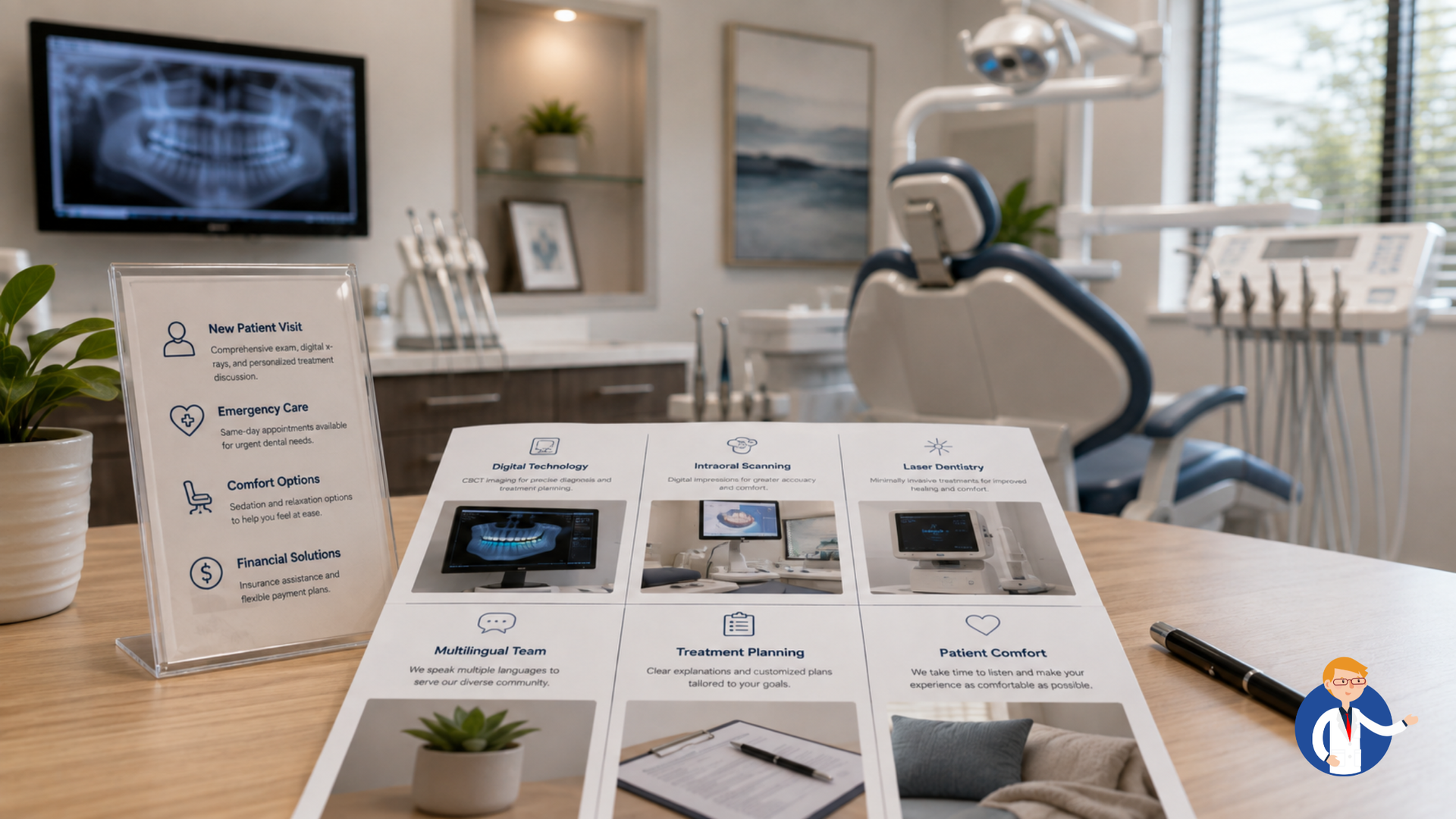
Many dental websites contain content that could belong to almost any practice. Replacing the practice name and city does not create meaningful originality. Generative search optimization for dentists requires more specific evidence. Search systems need to understand how the practice actually delivers care.
Instead of claiming to use “advanced technology,” name the technology and explain its role. If the office uses a CBCT scanner for implant planning, an intraoral scanner for digital impressions, or a dental laser for certain procedures, describe how it supports diagnosis or treatment. Other valuable first-hand details include:
- What happens during a new-patient visit
- How emergency appointment requests are handled
- Which comfort and sedation options may be available
- How the team supports patients with dental anxiety
- Which languages are spoken at the office
- What insurance or financing assistance is offered
- How treatment plans and costs are explained
- What makes the practice’s approach distinctive
These details serve two purposes. They help prospective patients make informed decisions, and they give AI systems specific facts that can be used in responses to detailed questions.
Does Consistent Business Information Improve AI Visibility?
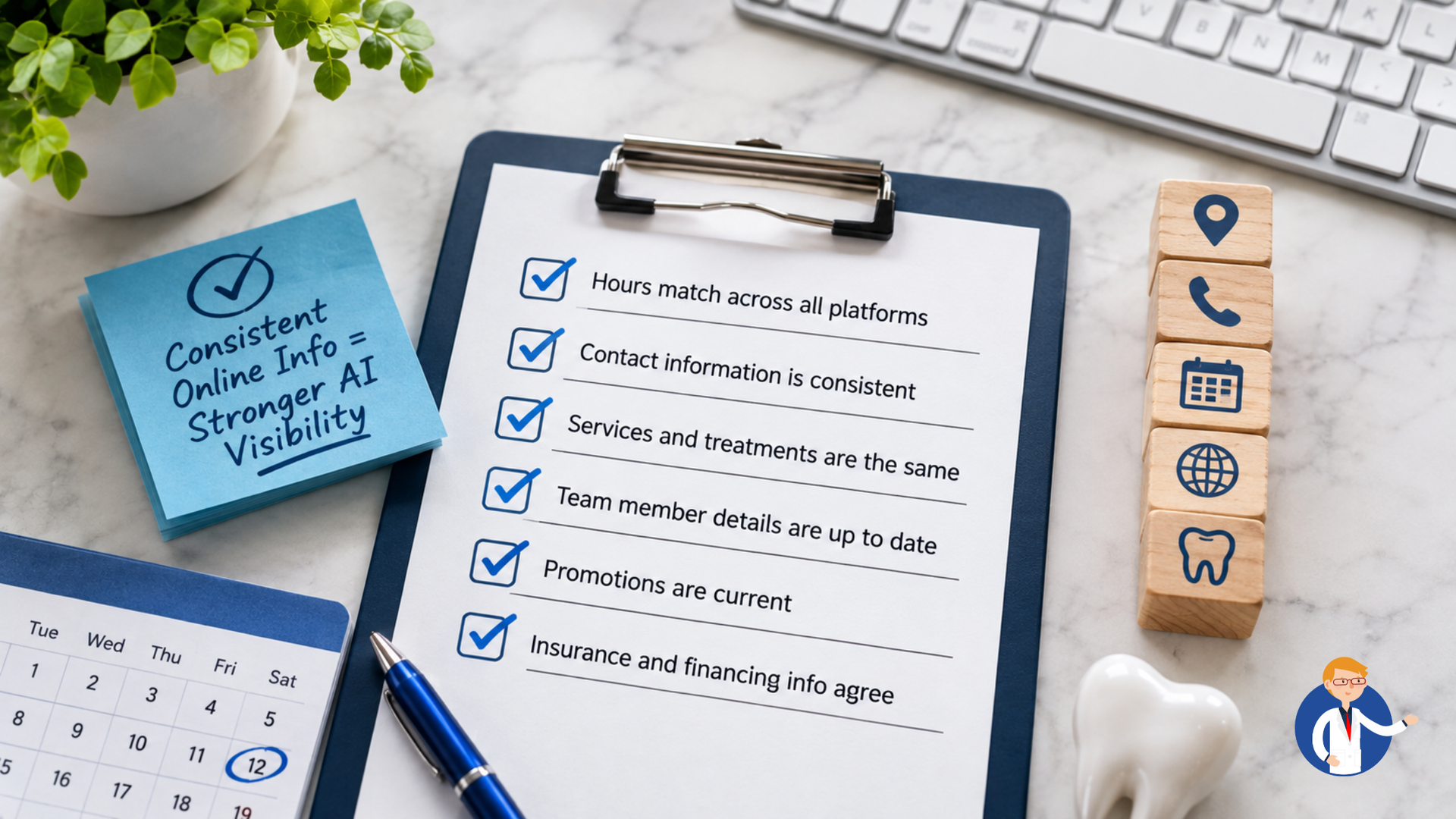
AI search systems may compare a practice website with information found across other platforms. When the facts agree, those sources reinforce one another. When they conflict, confidence can weaken.
For example, the website may promote Saturday appointments while Google Business Profile shows the office closed. A directory may list services that the current website never mentions. An old promotion may remain visible for months after it expires. Google’s Business Profile guidelines emphasize representing a business accurately and consistently. Practices should therefore review their online information whenever there is a change in:
- Dentists or team members
- Office hours or holiday closures
- Locations or contact information
- Treatments and technology
- Insurance participation
- Promotions and financing
- Appointment availability
Consistency does not mean every platform must contain identical sentences. It means the underlying business facts should agree everywhere they appear.
How Do Reviews Support Dental Practice Trust?

A practice can describe its own strengths, but patient reviews provide independent validation.
Detailed reviews may mention communication, comfort, emergency availability, staff professionalism, treatment explanations, or experiences with a particular service. These natural descriptions help establish what the practice is known for.
Dental offices should request reviews ethically and consistently rather than generating a sudden, unusual volume. Review responses should remain professional and must not reveal private health or treatment information.
Negative feedback does not automatically damage AI search visibility. In fact, a calm and appropriate response can demonstrate accountability. The greater concern is a pattern of unresolved complaints, aggressive responses, suspicious review activity, or no recent patient feedback.
Does Schema Markup Help Dental Practices Appear in AI Results?
Structured data helps search engines interpret information in a standardized format. Schema.org provides a specific dentist type that can identify details such as the practice name, address, telephone number, website, and opening hours.
Schema can also clarify relationships between an organization, its dentists, services, and locations. However, it must match information that patients can see on the page.
Adding unsupported ratings, misleading services, hidden claims, or incorrect business information does not improve trust. Structured data should clarify accurate content, not compensate for missing content.
Why Is Technical SEO Still Important?

Even the strongest content cannot become a useful AI source if search engines cannot access or index it.
A trustworthy dental website should have secure HTTPS connections, mobile-friendly pages, readable text, logical internal links, accurate canonical tags, working forms, and dependable loading performance. Important information should not exist only inside images or interactive elements that are difficult to process.
Google confirms that a page must be indexed and eligible to appear in traditional search results before it can be shown as a supporting link in its AI features. Google Search Console should therefore be monitored for indexing errors, security issues, manual actions, broken pages, and unexpected traffic changes.
How Can Dental Practices Build AI Search Trust?

Start with accuracy before trying to increase content volume. Verify the practice’s identity, correct inconsistent listings, strengthen provider biographies, and improve the most important service and location pages.
Then create useful content around genuine patient questions. Connect related pages through internal links, add accurate structured data, cite reputable sources when appropriate, and maintain an ethical review strategy.
AI search optimization is not a one-time task. Provider information, services, hours, promotions, and patient questions change over time. Practices need scheduled content reviews, listing audits, technical checks, and reputation monitoring to keep their digital presence reliable.
Frequently Asked Questions About Dental AI Search

Can a dental practice appear in Google AI Overviews?
Yes. A page may appear as a supporting source when it is indexed, eligible for a search snippet, relevant to the question, and considered useful. Inclusion is never guaranteed.
Does a dental website need special AI schema?
No. Google states that no special schema or AI-specific file is required. Accurate standard structured data can still help search engines understand the practice.
How often should dental website content be reviewed?
High-priority service, provider, location, insurance, and promotion pages should be checked regularly and updated whenever practice information changes.
What is the most important AI trust signal?
There is no single signal. The strongest results come from combining accurate practice information, credible clinical content, external validation, consistent listings, and sound technical SEO.
Build a Dental Presence AI Search Engines Can Trust

AI search engines are changing how patients discover and compare dental practices, but visibility still begins with trust. Accurate clinical content, complete provider information, consistent business details, authentic reviews, and a technically sound website all help search systems understand whether a practice is a credible source.
At our dental marketing agency, we help practices bring these signals together into one connected digital presence. Rather than treating website content, local listings, technical SEO, and reputation management as separate efforts, we align them, so they consistently communicate with who the practice is, where it provides care, and what makes its information dependable.
As AI-powered search continues to evolve, dental practices with the clearest and most credible online presence will be better positioned to appear in the answers patients receive. The goal is not simply to create more content. It is to create reliable information that patients can use, and AI search engines can confidently reference.
Ready to grow your dental practice? Let’s talk.
Recent Posts