

The 2026 GEO Audit Checklist for Dental Practices
Source: Dr. Marketing
Search visibility is no longer limited to earning a blue link on Google. Patients now use Google AI Overviews, AI Mode, ChatGPT, Gemini, Perplexity, voice assistants, and other answer engines to research symptoms, compare treatments, evaluate dental practices, and decide where to book. This shift has made generative engine optimization, or GEO, an important extension of dental SEO. GEO focuses on helping AI-powered platforms accurately understand, trust, retrieve, and cite information about dental practices.
However, GEO should not be treated as a replacement for SEO. Google confirms that its generative search features remain connected to its core search ranking and quality systems. A dental website must still be crawlable, indexable, technically sound, locally relevant, and genuinely helpful before it can become a dependable source for AI-generated answers.
Use this 2026 GEO audit checklist to determine whether your dental practice is prepared for both traditional search results and the growing number of AI-assisted patient journeys.
1. Confirm That Search Engines Can Access the Website

A dental website cannot appear in an AI-generated response if the information cannot first be discovered and processed. Google states that pages must be indexed and eligible to appear with a search snippet before they can be considered for its generative AI search features. Start the audit by reviewing the website’s technical accessibility.
- Check Google Search Console for indexing errors, excluded pages, crawl issues, manual actions, and security warnings. Important treatment and location pages should be indexed under their preferred URLs.
- Review the robots.txt file and page-level robots directives. Make sure important pages are not accidentally blocked by noindex tags, password protection, development settings, or disallow rules.
- Submit an accurate XML sitemap containing canonical, indexable URLs. Remove redirects, broken pages, duplicate URLs, and outdated staging links from the sitemap.
- Confirm that essential information is visible in the rendered page content. Service details, dentist credentials, office information, and patient answers should not depend on scripts that fail to load.
- Test mobile usability, page speed, navigation, and Core Web Vitals. A fast, stable experience helps both search systems and prospective patients access the information they need.
Technical SEO remains the entry point to GEO. AI-friendly writing cannot compensate for a website that search engines cannot reliably crawl or interpret.

2. Audit Business Information Across the Digital Ecosystem
AI systems may evaluate information from several sources before presenting a dental practice as an answer. Conflicting business details can make it difficult to determine which information is accurate. Compare the following information across the website, Google Business Profile, Bing Places, Apple Business Connect, major directories, professional profiles, social accounts, and healthcare platforms:
- Practice name
- Street address
- Primary phone number
- Office hours
- Website URL
- Dentist names and credentials
- Services offered
- Areas served
- Appointment information
Minor formatting differences are usually not a serious concern, but factual inconsistencies are. If the website says the practice offers emergency appointments while the Google Business Profile does not mention emergency dental care, search platforms receive an incomplete picture. Each dental location should also have a dedicated location page with its own address, phone number, hours, providers, services, directions, parking information, and local context. Avoid creating nearly identical city pages that only replace one location name with another.
3. Make the Practice’s Identity Easy to Understand
A strong GEO audit asks a simple question: Can a search engine quickly determine who the practice is, where it operates, who provides care, and what it is qualified to treat? The homepage and About page should clearly explain:
- The full name of the dental practice
- The city and communities it serve
- Whether it is a general, family, pediatric, cosmetic, implant, orthodontic, or specialty practice
- The treatments it provides
- The dentists and specialists associated with the practice
- Meaningful qualities that distinguish the patient experience
Avoid relying entirely on broad statements such as “exceptional care” or “beautiful smiles.” These phrases do not give search engines or patients much verifiable information. A more useful description might explain that the practice provides family and cosmetic dentistry in a specific community, offers digital scanning and sedation options, accepts certain insurance plans, and provides same-day support for dental emergencies. Specific facts create a clearer and more credible entity.
4. Strengthen Dentist Experience and Clinical Credibility

Dental information can influence health-related decisions, so expertise and trust are especially important. Every dentist should have a complete, indexable biography rather than a brief paragraph hidden on a general team page. Provider profiles should include applicable details such as:
- Full name and professional designation
- Education and clinical training
- Years or areas of experience
- Professional memberships
- Continuing education
- Languages spoken
- Treatment interests
- Community involvement
- A professional photograph
- Links to relevant professional profiles
Treatment articles should identify the dentist or qualified clinical reviewer when appropriate. Include an original publication date and a meaningful review or update date. A recent date should only be added when the content has actually been reviewed. Clinical claims also need careful attention. Avoid guarantees, exaggerated outcomes, unsupported comparisons, or language that implies every patient is a candidate for the same treatment. Clear explanations of candidacy, limitations, alternatives, and the need for an examination make the content more responsible and useful.
5. Evaluate Every Treatment Page for Answer Quality
Many dental service pages are written like brochures. They introduce a treatment, repeat a few benefits, and end with a booking button. That may not be enough for conversational searches or AI-generated answers. Each major treatment page should answer the questions a real patient may ask before contacting the practice:
- What is the treatment?
- What concern does it address?
- Who may be a suitable candidate?
- What happens during the procedure?
- Does treatment hurt?
- How long does it take?
- What is recovery like?
- How long can results last?
- What alternatives may be considered?
- What factors affect the cost?
- Does insurance commonly cover it?
- When should someone contact the dentist?
Give a short, direct answer near the beginning of each section, followed by useful explanation and context. This structure supports AEO because a clear passage can answer a specific question without forcing the reader to interpret several unrelated paragraphs. Do not create dozens of thin pages to target every wording variation of the same query. Google’s current guidance emphasizes unique, non-commodity content and warns against scaled pages created mainly to manipulate search visibility. One thorough, original page is often more valuable than several repetitive ones.
6. Add Original Information That Competitors Cannot Easily Copy
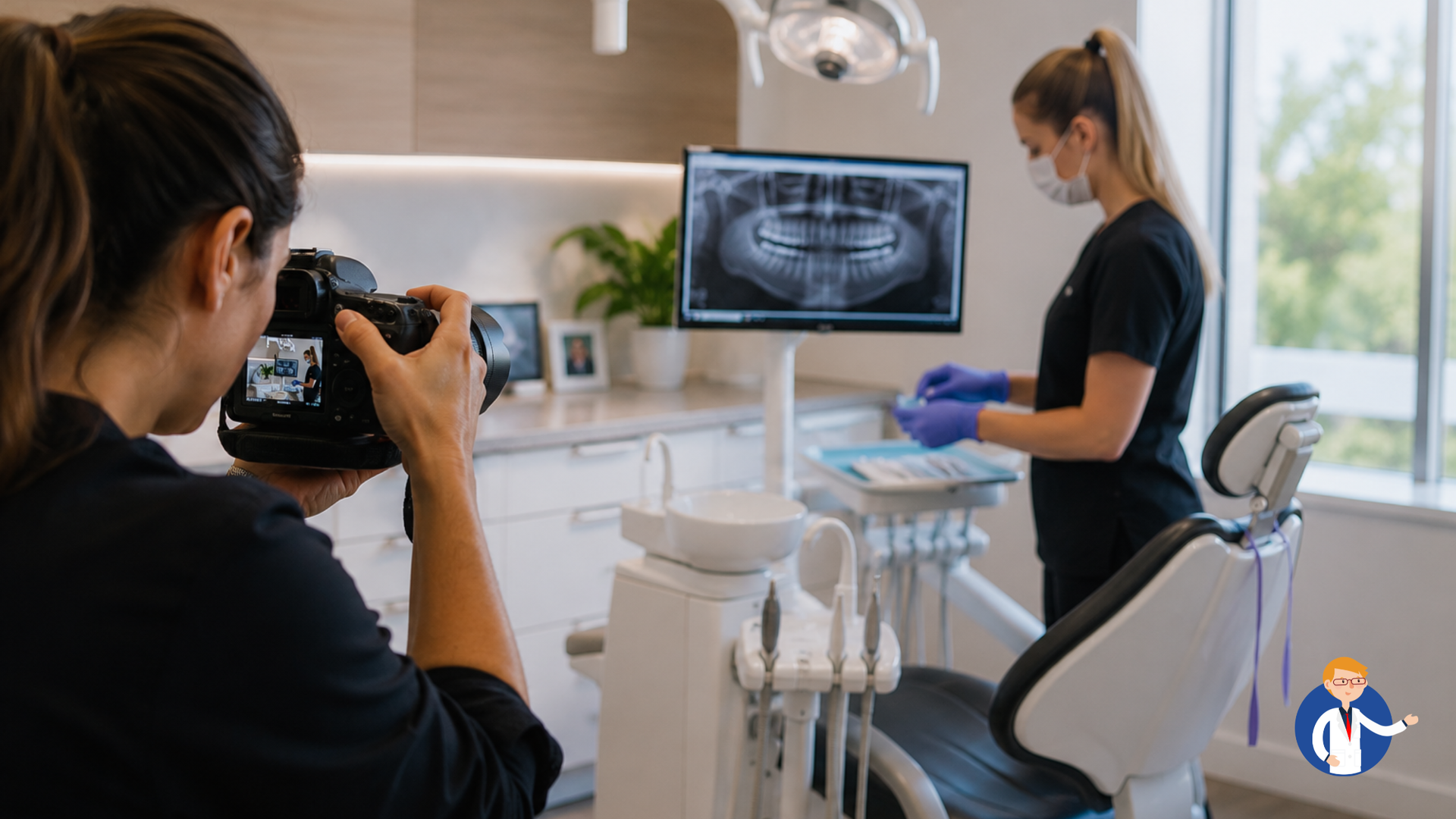
Generic definitions of dental implants, veneers, or root canal therapy already exist across thousands of websites. Dental practice becomes a stronger potential source when it contributes to first-hand, practice-specific information. Look for opportunities to include:
- The technology used during diagnosis or treatment
- How the practice approaches dental anxiety
- What patients can expect during their first appointment
- Common questions heard during consultations
- How treatment planning decisions are made
- Original photographs of the office and team
- Dentist-reviewed educational videos
- Anonymized case examples used with appropriate consent
- Guidance based on the needs of the local patient population
Original expertise creates information gain. It gives search engines a reason to retrieve the practice page instead of another page that repeats the same basic explanation.
7. Review Local Relevance and Reputation Signals
For dental practices, GEO and local SEO are closely connected. Google specifically recommends maintaining a Google Business Profile to help business information appear in search experiences, including generative results.
Audit the profile for accurate categories, services, hours, appointment links, photographs, attributes, and business descriptions. Review whether new patient services, languages, emergency availability, accessibility details, and accepted payment options are represented accurately.
Reviews also help prospective patients understand recurring aspects of the experience. A practice should have a consistent, policy-compliant process for requesting reviews and responding professionally.
Never manufacture reviews or insert target keywords into patient comments. Instead, look for genuine patterns in feedback. If patients regularly mention gentle care, clear explanations, short wait times, or positive experiences with children, make sure the website provides information supporting those qualities.
8. Validate Structured Data Without Overestimating It

Structured data can help search engines interpret business details, although it does not guarantee rankings, citations, or AI visibility. Review the site for relevant and accurate markup, which may include:
- Dentist or an appropriate LocalBusiness subtype
- Organization
- Person for individual dentists
- BreadcrumbList
- Article or BlogPosting
- VideoObject, when original videos are present
The structured information must match what visitors can see on the page. Do not markup reviews, ratings, services, FAQs, addresses, or credentials that are not visibly and accurately represented.
Google has also clarified that there is no special schema required for its generative search experiences. Structured data supports overall search clarity, but it is not a shortcut to GEO performance.
9. Test Brand Visibility in AI Search
A GEO audit should examine actual outputs, not just website elements. Test a consistent group of prompts across major search and answer platforms. Examples may include:
- “Who offers dental implants in [city]?”
- “Which dentist in [city] provides sedation for anxious patients?”
- “Where can I find an emergency dentist near [neighbourhood]?”
- “Does [practice name] offer Invisalign?”
- “Who are the dentists at [practice name]?”
- “What services does [practice name] provide?”
Record whether the practice appears, which sources are cited, whether the facts are correct, and which competitors are mentioned. Test both branded and non-branded questions. Do not treat a single response as a permanent ranking. AI results can vary by wording, platform, location, personalization, and date. The objective is to identify patterns and factual gaps, not to claim a fixed position.
10. Establish Meaningful GEO Measurement

Traditional rankings alone cannot show the full patient journey. A 2026 measurement plan should combine conventional SEO performance with emerging AI visibility indicators. Monitor:
- Organic clicks, impressions, CTR, and landing-page performance
- Local rankings and Google Business Profile actions
- Indexed treatment and location pages
- Conversions from organic landing pages
- Referral traffic from identifiable AI platforms
- Brand mentions and linked citations in AI responses
- Accuracy of generated business information
- Visibility across a repeatable prompt set
- Leads that mention AI search during intake
Google Search Console now provides reporting for generative AI performance within Google Search. Use first-party data where available, while treating third-party AI visibility scores as directional rather than absolute. No outside platform has access to every AI system’s internal ranking process.
Is Your Dental Practice Ready to Be Recommended by AI?

When a prospective patient asks an AI platform to recommend a dentist, explain a treatment, or compare local practices, your office may be evaluated before that patient ever visits your website. What the platform finds, understands, and trusts can influence whether your practice becomes part of the answer.
That does not mean you need to chase every new AI trend. It means the information about your practice must be accurate, helpful, consistent, and easy to verify. Your website should clearly explain who you are, where you are located, which treatments you provide, who delivers the care, and what patients can expect when they choose your office.
For busy dental teams, reviewing every technical, content, and local visibility factor can feel overwhelming. At Dr. Marketing, we help dental practices identify the gaps that may be limiting their visibility across traditional and AI-powered search. By bringing SEO, GEO, AEO, local optimization, and dental content strategy together, we can turn the findings from an audit into a practical plan for improvement.
The goal is not simply to appear in more AI-generated answers. It is to make sure that when patients search for dental care, your practice is accurately represented, trusted for the services you provide, and positioned as a confident next choice.
Ready to grow your dental practice? Let’s talk.
Recent Posts