

How to Win AI Search: Reviews, Content, and Authority in 2026
Source:
Dr. Marketing
Search is no longer just a list of links.
In 2026, more people are skipping traditional search results and going straight to conversational AI systems like ChatGPT and Google Gemini to get a single, confident answer. This shift is quietly but fundamentally changing how patients discover and choose dental practices. Instead of comparing ten websites, users now ask AI tools to summarize options, explain treatments, and recommend what to do next. That means your dental practice is no longer competing only for rankings. You are competing to be included in the answer itself. Traditional search queries looked like this:
- “dentist near me”
- “dental crown cost”
- “emergency dentist open today”
These were short, keyword-based, and designed for ranking algorithms. Today, patients ask questions like:
- “How do I know if I need a crown or a filling?”
- “What kind of dentist should I look for if I’m nervous?”
- “What should I do if I have tooth pain but I’m not sure it’s an emergency?”
These are not simple searches. They are decision-making prompts. AI systems respond by pulling information from across the web, summarizing it, and presenting one trusted response. Here is the new reality: your content does not just need to rank. It needs to be
selectable by generative engines. That is where
Generative Engine Optimization (GEO) comes in.
What Is Generative Engine Optimization (GEO)?

Generative Engine Optimization (GEO) is the process of optimizing your online presence so AI systems like ChatGPT and Gemini can extract, trust, and reuse your content when generating answers. Traditional SEO focuses on ranking pages in search results. GEO focuses on becoming the source of the AI-generated response.
- SEO = Compete for clicks
- GEO = Compete for inclusion
When someone asks ChatGPT for the best dentist for dental implants or asks Gemini whether tooth pain requires urgent care, the AI does not show a list of ten websites. It builds a summary answer using trusted sources. If your dental practice is not structured for extraction, clarity, and credibility, it may never be part of that summary.
A simple definition: Generative Engine Optimization is the dental practice of structuring your online presence so AI assistants can confidently extract, trust, and reuse it in their generated answers. For GEO to work, your content must be:
- Clear enough to summarize
- Structured enough to extract
- Trustworthy enough to choose
Who Needs Generative Engine Optimization?

GEO is especially important for:
- Independent dental practices competing in crowded local markets
- Multi-location dental groups building regional authority
- Dental marketing teams adapting to AI-driven discovery
- Agencies supporting dentists who want visibility beyond rankings
If your future patients are asking AI what to do about tooth pain, cosmetic dentistry, or dental implants, GEO is no longer optional.
How Generative Engines Choose What to Recommend
ChatGPT and Gemini do not browse the internet like a human. They do not scroll and click the first result. They retrieve information, evaluate trust signals, and generate a summarized response. For dental practices, that means generative engines analyze patterns such as:
- What people say in reviews
- How clearly your website explains services
- Whether your content answers real questions
- Whether reputable third-party sources reference your practice
The strongest GEO signals for dental practices include:
- Reviews (content, responses, and quantity)
- Structured service-page clarity
- Blogging content that answers real dental questions
- Third-party references linking back to your website
Let’s examine each through the lens of Generative Engine Optimization.
Reviews as a Core GEO Signal

Reviews are one of the most powerful inputs generative engines use when evaluating local businesses. But in GEO, reviews are not just about having a 4.9 rating. They are about context, clarity, and consistency.
Review Content Shapes AI Understanding
Generative engines learn what your dental practice is known for by analyzing the language in reviews. Reviews that mention specific services such as cleanings, crowns, dental implants, or emergency visits provide structured relevance signals.
Generic praise like “great office” gives minimal context. Reviews that mention service categories give AI systems clearer associations.
For example, when multiple reviews reference dental crowns, AI becomes more confident associating your practice with crown procedures. This increases the likelihood your practice appears in AI-generated answers related to crowns.
Review Responses Reinforce Topical Relevance
Your responses to reviews are also part of your digital footprint.
Professional replies that acknowledge the type of service or general visit category strengthen topical clarity without revealing any protected health information. From a GEO perspective, responses help reinforce consistency and professionalism, both of which increase AI confidence.
Review Volume Builds Trust Depth
Generative engines favor patterns over isolated data points. A steady stream of reviews over time signals reliability and stability. More reviews create stronger data patterns, which reduce uncertainty for AI systems deciding whether to include your dental practice in a recommendation.
GEO Insight: Reviews should be consistent, service-aware, and professionally managed. Star ratings alone are no longer sufficient in generative search.
Structured Service Pages and GEO
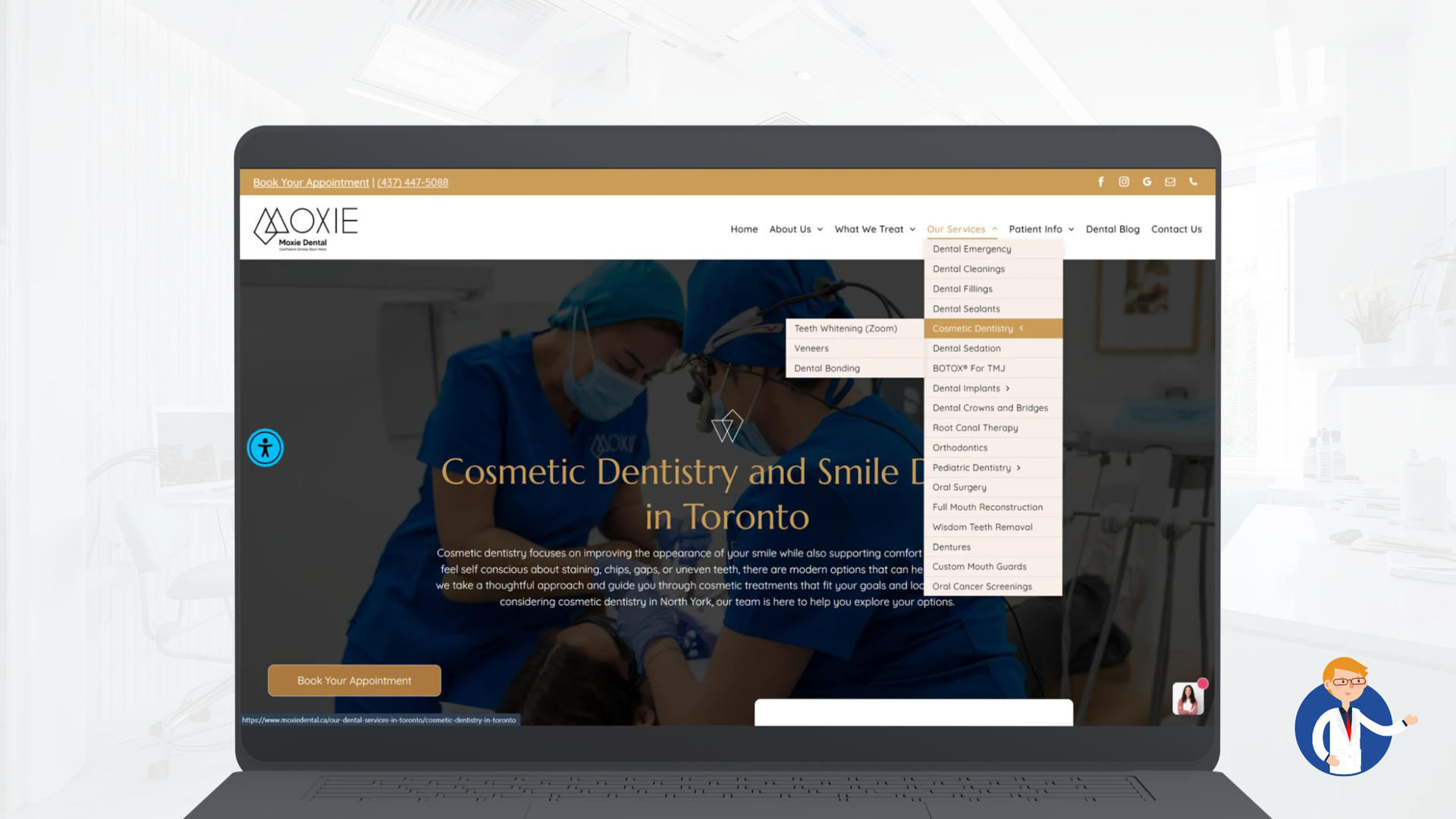
Generative engines prefer structured, clearly organized content that can be extracted in standalone segments. Your dental service pages should not just describe treatments. They should clearly explain:
- What the treatment is
- When is it typically recommended
- What the general process involves
- What should someone do next
For example, a dental implant page that clearly outlines candidacy, procedure steps, healing timelines, and consultation recommendations gives generative engines usable, extractable material. Clarity improves selection probability. Marketing-heavy language reduces it.
The more your content reads like an educational explanation rather than a sales pitch, the easier it becomes for AI systems to summarize accurately.
GEO Insight: Clear structure improves extraction. Extraction improves inclusion.
Blogging for Generative Engine Optimization

Blogging remains one of the strongest GEO tools when done intentionally. Generative engines rely heavily on blogs when users ask complex or uncertain questions.
What Makes a Blog GEO-Friendly?
AI systems prefer blog posts that:
- Address one specific question
- Explain causes and implications clearly
- Provide general guidance on next steps
- Avoid vague or overly promotional language
Dental Blog Topics That Align With AI Prompts
Instead of broad topics like “The Importance of Oral Health,” generative engines respond better to targeted content such as:
- “Tooth Sensitivity: Causes and When to Seek Dental Care”
- “Crown vs Filling: How Dentists Determine Treatment”
- “What to Do If a Tooth Chips or Cracks”
- “When Tooth Pain May Require Immediate Attention”
These topics mirror the way patients phrase questions in AI syste ms.
Structure Prevents Overload
To remain content-heavy but readable, blogs should be broken into logical sections with descriptive headings. Each section should move the reader forward without unnecessary filler. This improves both human engagement and AI extractability.
GEO Insight: Blogs train generative engines on how your practice explains dental concerns.
Third-Party References and GEO Authority
Generative engines prefer information that is corroborated across multiple sources. Even a well-structured website benefits from third-party validation.
What Counts as a Strong GEO Reference?
For dental practices, high-value references include:
- Chamber of commerce listings
- Dental association profiles
- Community sponsorship pages
- Local news articles
- Reputable dental directories
- Specialist partnership websites
These references help AI systems confirm that your practice exists beyond your own website.
Why GEO Rewards External Validation
When multiple credible sources mention and link to your dental practice, generative engines interpret that as legitimacy. This increases confidence and improves the probability of inclusion in AI-generated recommendations.
GEO Insight: Authority is not self-declared. It is externally confirmed.
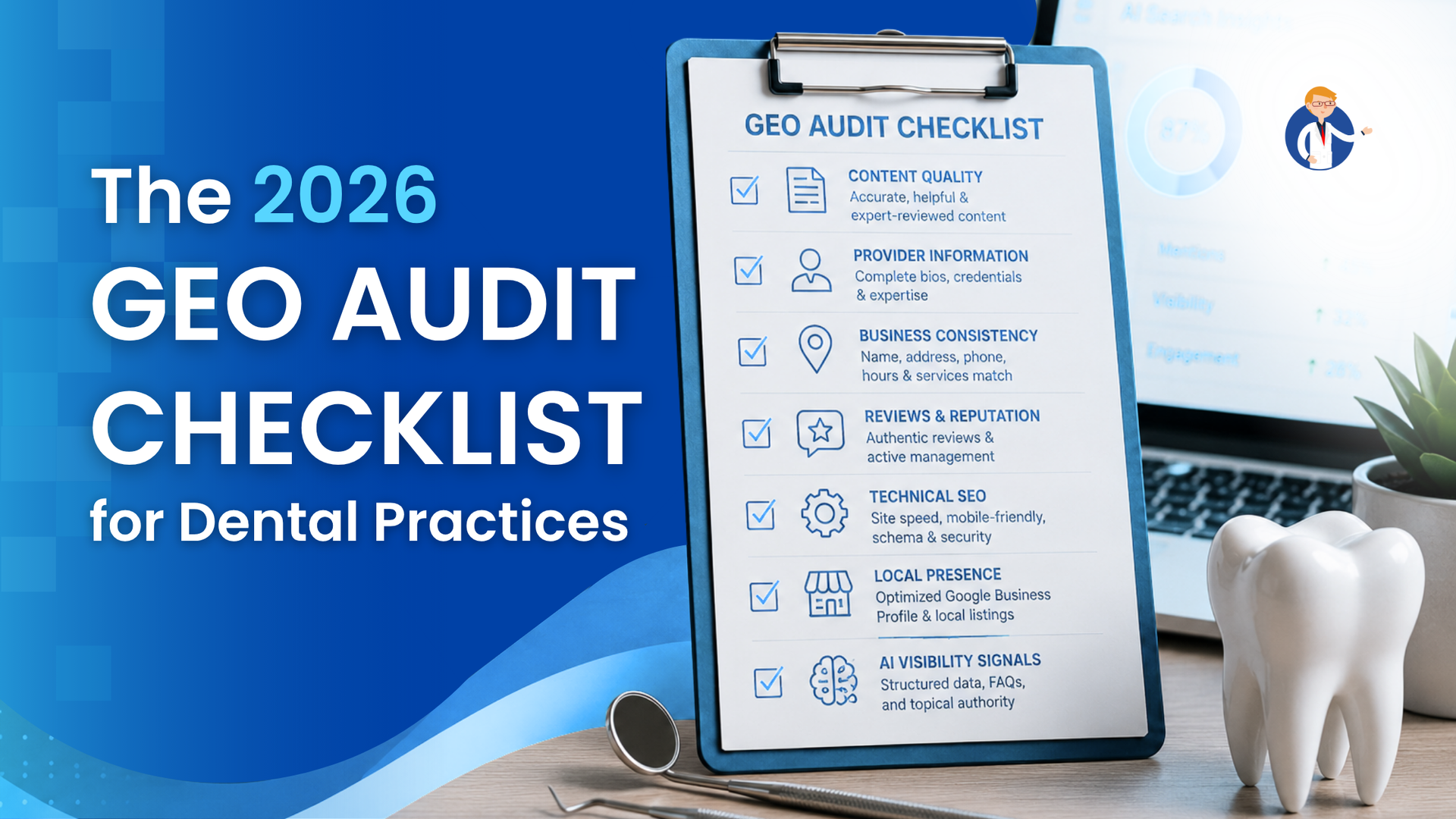
A Practical Generative Engine Optimization Checklist for Dentists

To implement GEO effectively, focus on the following high-impact actions:
Reviews
- Maintain consistent review growth
- Encourage service-level detail
- Respond professionally and consistently
- Avoid repetitive, automated responses
Website Structure
- Organize service pages clearly
- Explain treatments in plain language
- Avoid vague or purely promotional wording
Blogs
- Publish question-driven content regularly
- Focus on one concern per post
- Use structured headings and logical flow
Third-Party References
- Strengthen professional and local listings
- Build community and specialist partnerships
- Earn legitimate mentions with backlinks
Conclusion: In Generative Search, Inclusion Is the Goal

ChatGPT and Gemini are reshaping how patients choose a dentist.
Ranking is no longer the finish line. Inclusion is.
Generative Engine Optimization ensures your dental practice is structured, trusted, and clear enough to be selected inside AI-generated answers. When you align your reviews, website structure, blogs, and third-party authority with how generative engines evaluate trust and clarity, your visibility compounds over time.
Not just in search rankings.
But in the answers patients rely on most.
Ready to grow your dental practice? Let’s talk.
Recent Posts