

Is AI Changing How Patients Find Your Dental Practice?
Source: Dr. Marketing
Yes, AI is changing how patients can discover and compare dental practices. With tools such as Google’s AI Mode, people can ask detailed questions, explore follow-up answers, and gather information before deciding which practice to contact.
Your next patient could begin with a question like:
“How do I find a dentist who understands dental anxiety?”
They might then explore nearby options, check appointment hours, and visit a few practice websites. By the time they contact an office, they may already know what they want to ask.
For dental practices in Canada and the USA, this adds another layer to patient discovery. Your marketing needs to help people find your practice and understand whether it meets their needs.
What does that look like in practice? It starts with understanding the questions patients ask before they search for your name.
Your Next Patient May Start with an AI Question

A patient’s first search is often about concern. They may be thinking about missing teeth, an upcoming move, or finding dental care that fits their schedule. Imagine someone who has recently moved to a new city. They could ask:
“What should I look for when choosing a family dentist?”
An AI-generated response might help them identify factors to investigate, such as location, services, appointment availability, and the experience of the dental team.
That person now has a clearer idea of what to look for. Their next search could be for nearby practices that meet those requirements. This is a useful way to think about AI search for dental practices: it can help shape the questions people bring to their provider search.
Your website should make those questions easy to answer. Someone should be able to understand who you care for, where you are located, and how to arrange a visit without searching through several pages.
From “Dentist Near Me” to More Specific Questions
Short searches still matter, but AI tools also give people a way to describe their situation in everyday language.
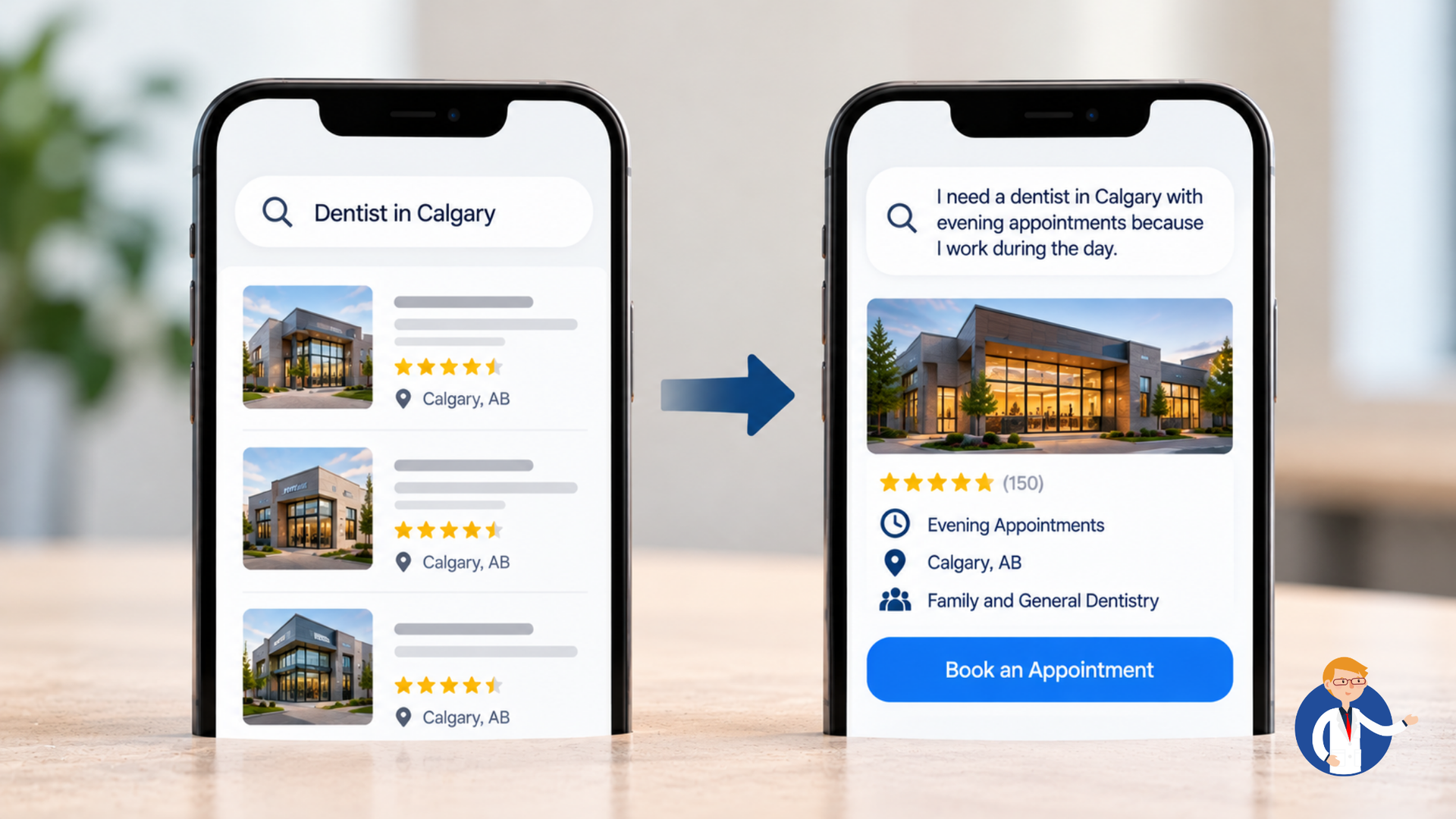
Consider the difference between these two searches:
“Dentist in Calgary.”
“I need a dentist in Calgary with evening appointments because I work during the day.”
The second question reveals more about what could influence the person’s decision. Location matters, but appointment hours could determine which office they contact. Other illustrative questions include:
- “How can I compare dentists for my child’s first visit?”
- “What should I ask at a dental implant consultation?”
- “How do I find a practice that helps nervous patients?”
- “What payment information should I check before booking?”
Your content does not need to repeat every possible question. It should clearly explain the details that matter to your patients. A practice that offers evening appointments should make its hours easy to find. An office that welcomes children should explain what families can expect. Specific information helps people connect their needs with their services.
How AI Can Shape a Patient’s Shortlist
AI-assisted research can influence what a patient looks for when comparing practices. It may help them understand options, identify questions, or find websites to investigate.
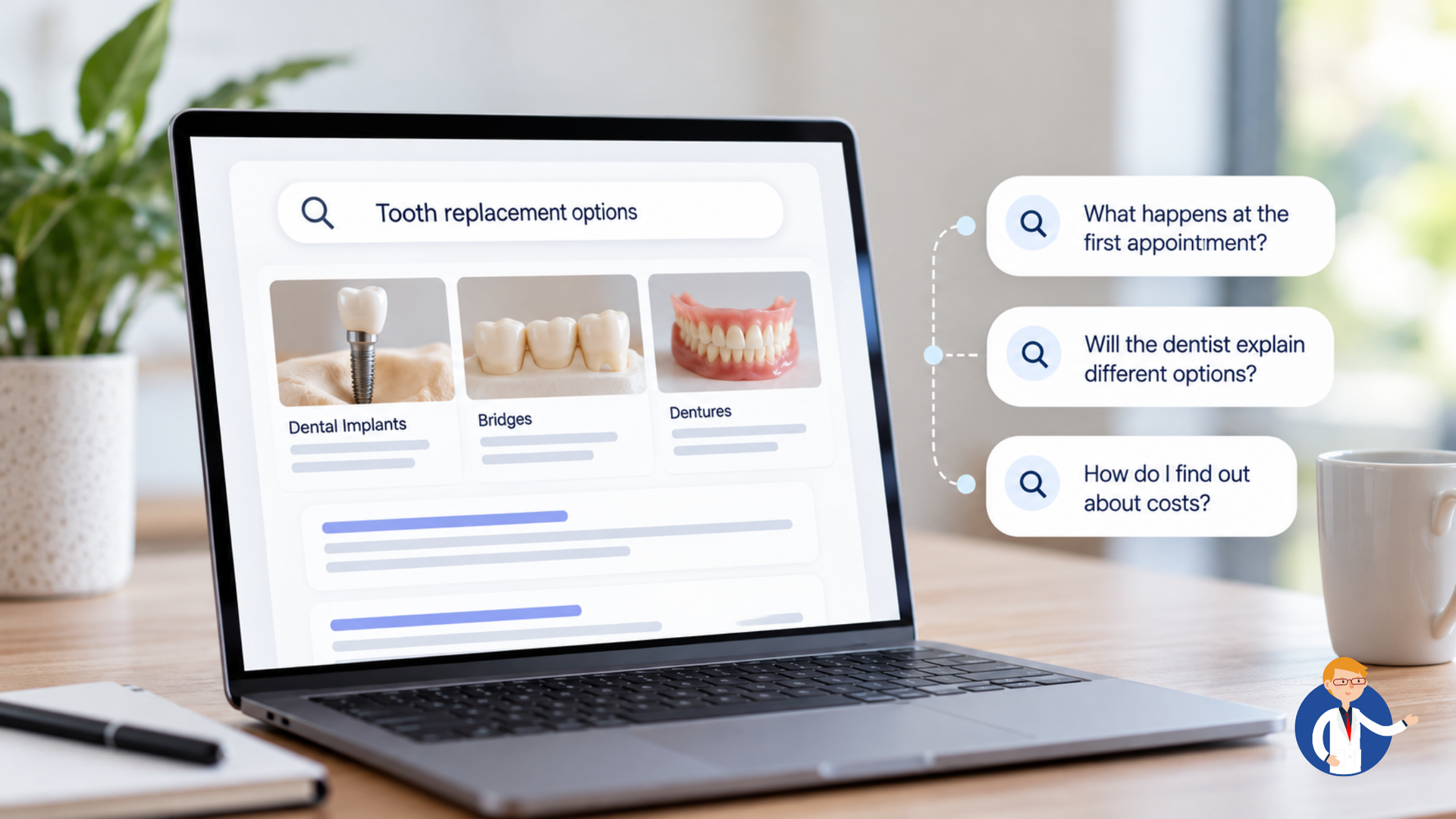
Consider someone researching tooth replacement. They could first explore the differences between implants, bridges, and dentures. Next, they might look for local providers and review what each practice says about consultations. At that point, a simple list of services may leave questions unanswered.
The person might want to know:
“What happens at the first appointment?”
“Will the dentist explain different options?”
“How do I find out about costs?”
Your website can help them resolve those questions without suggesting that treatment is suitable before an assessment.
This does not mean every patient follows the same path. Some book after a recommendation. Others search directly for an office nearby. AI adds another possible route into that journey. The opportunity is to provide useful information wherever someone begins, then give them a clear reason to explore your practice further.
What Patients Check Before Choosing You

Once patients identify a possible practice, they need to confirm practical details. These can make the difference between continuing their research and requesting an appointment.
Start with the basics: your location, hours, phone number, services, and new patient information. For multiple offices, make it clear which services and appointment hours apply to each location. Then consider the questions that affect confidence.
A nervous patient may want to know how your team discusses comfort concerns. A parent may want an explanation of a child’s first visit. Someone considering a larger treatment may need information about consultations and payment arrangements.
Canadian practices should accurately describe their Canadian Dental Care Plan participation where applicable. US practices should clearly distinguish insurance acceptance from network participation. Keep this information consistent across your website and business listings. Google identifies relevance, distance, and prominence as the main factors in local results, and recommends maintaining complete business information.
Accurate details support local discovery and help patients verify that your practice fits their needs.
What This Means for Your Dental Marketing
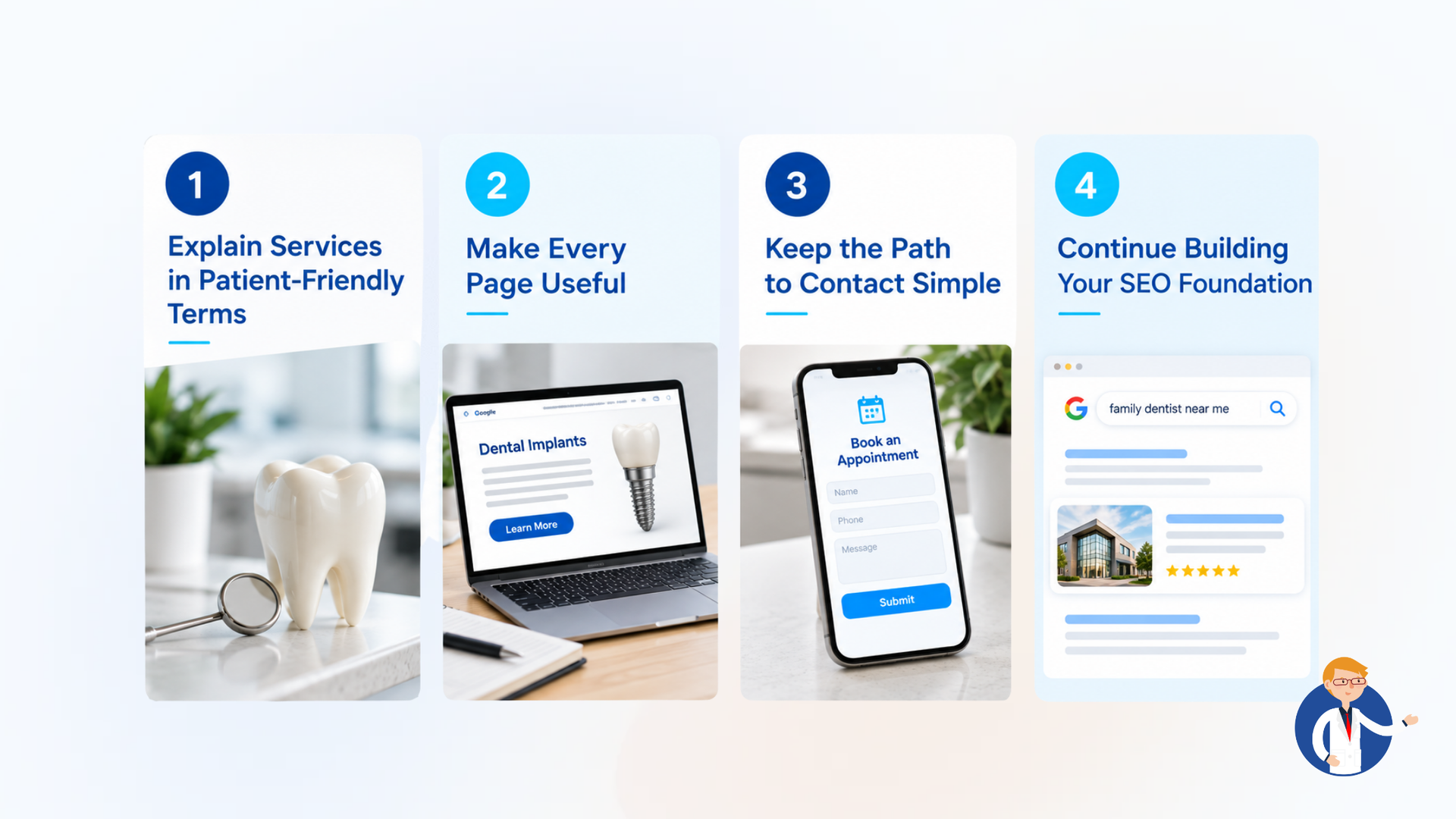
Your dental marketing should connect the patient’s initial question with a useful next step. That requires clear content, reliable information, and a website that is easy to navigate.
Explain Services in Patient-Friendly Terms
Someone may understand “replacing a missing tooth” before they understand the differences between restorative options.
Introduce services using familiar language, then explain relevant terms. Help readers understand what the service involves and why a consultation may be needed. Have a dental professional review of clinical information, so explanations remain accurate.
Make Every Page Useful
Give each important service a clear purpose. An implant page can explain the consultation process. A family dentistry page can help patients understand the care available for different ages. Include practical details that reflect your office’s actual services. Original information about your team and appointment experience gives people something useful to evaluate.
Keep the Path to Contact Simple
After reading a page, a visitor should know what to do next.
Use a relevant invitation, such as requesting a consultation or contacting the office about appointment availability. Make phone numbers and forms easy to use on mobile devices. Explain what happens after an appointment request, including how your team will respond.
Continue Building Your SEO Foundation
AI visibility belongs within a broader dental SEO strategy. Google states that established SEO practices remain relevant to its AI features, including AI Overviews and AI Mode. Keep your website accessible to search engines, organize pages clearly, and link related information where it helps readers.
Clear headings and direct explanations improve readability. They support a well-organized website, but they do not guarantee that an AI system will cite or recommend your practice.
Are Patients Finding You Through AI?
To understand patient discovery, look at enquiries and appointments alongside website traffic.
AI-generated answers can affect clicking behaviour. Pew Research Center’s analysis of US browsing activity in March 2025 found that users clicked traditional Google results less often when an AI summary appeared. The study covered general searches, so it does not establish the effect on dental bookings or Canadian patients.
For your practice, the useful question is what happens across the whole journey.
Review appointment requests, relevant phone enquiries, and book new patient visits. Ask patients how they first heard about your office and what helped them choose it.
If someone mentions an AI tool, record that information. If they mention several sources, keep that context too.
A patient might discover you through one channel and make their decision through another. These answers can reveal which parts of your marketing help people move forward.
Help Patients Find Your Practice and Take the Next Step

AI gives patients another way to explore dental care before contacting an office. Your practice can respond by making its online information clear, accurate, and useful.
Think about the questions someone asks before they know your name. Explain how your services relate to those needs. Make practical details easy to verify and provide a straightforward route to an appointment enquiry.
At Dr. Marketing, we help dentists and dental practices across Canada and the USA connect dental SEO, website content, and digital marketing with their growth goals.
Contact Dr. Marketing to explore how your online presence can help more patients discover your practice and take the next step.
Ready to grow your dental practice? Let’s talk.
Recent Posts