

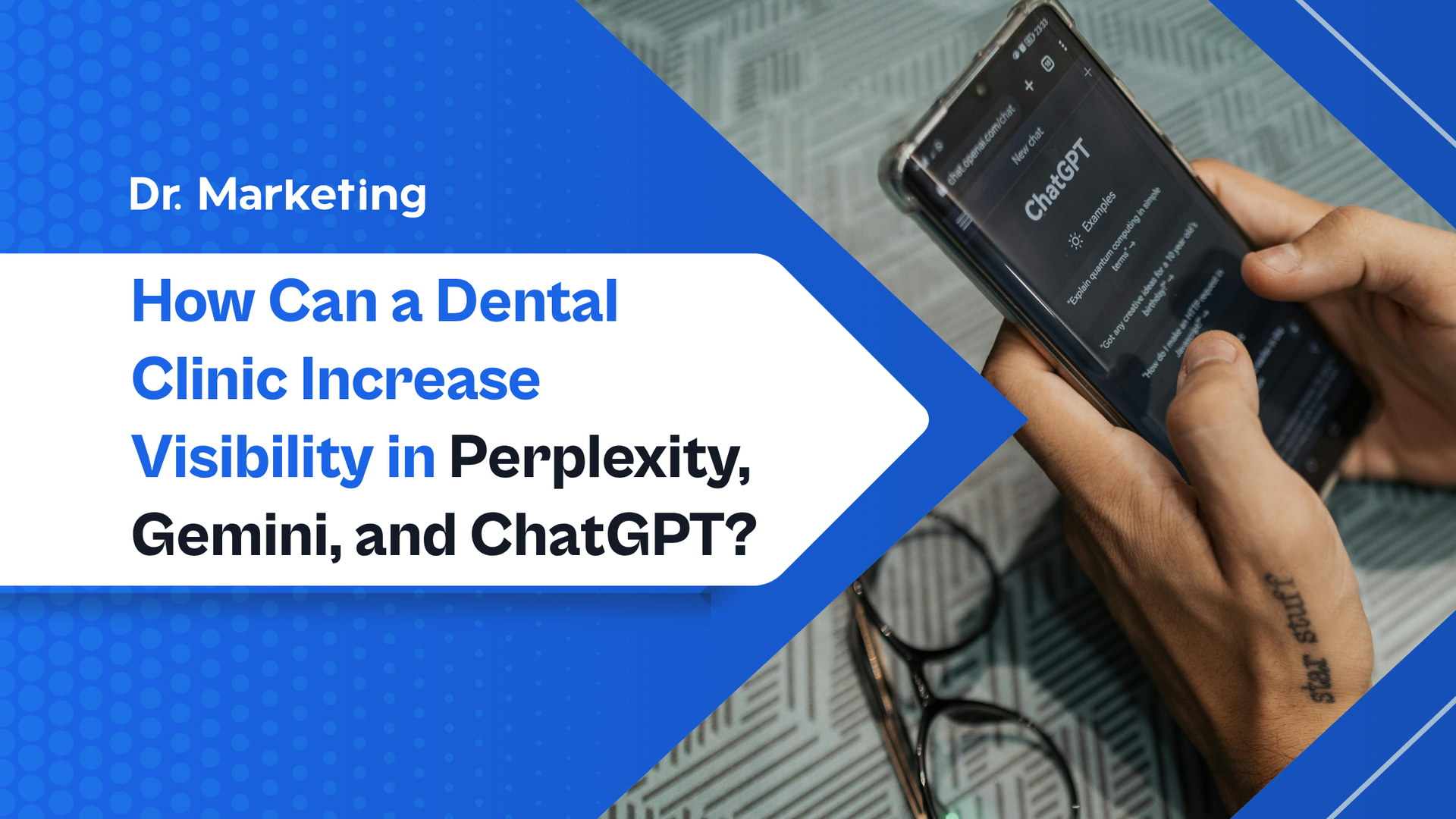
How Can a Dental Clinic Increase Visibility in Perplexity, Gemini, and ChatGPT?
Source: Dr. Marketing
Patients are no longer relying only on a traditional Google search to find dental information. They are also asking conversational platforms questions such as:
- “Who is a trusted emergency dentist near me?”
- “What type of dentist should I see for dental implants?”
- “Which dental clinic in my area offers sedation dentistry?”
- “How much does Invisalign usually cost?”
- “Where can I find a family dentist accepting new patients?”
Platforms such as ChatGPT, Gemini, and Perplexity can research these questions, summarize information, recommend next steps, and link to supporting sources. For dental clinics, this creates a new visibility opportunity, but appearing in AI-generated answers requires more than repeating keywords across a website.
A clinic must establish a clear, consistent, technically accessible, and trustworthy online presence. This process is often called generative engine optimization, or GEO. It works alongside search engine optimization and answer engine optimization to help AI platforms understand who you are, where you operate, what treatments you provide, and why your clinic may be relevant to a patient’s question.
How Do AI Platforms Find Information About Dental Clinics?

ChatGPT, Gemini, and Perplexity do not all generate answers in exactly the same way. Their features, data sources, and retrieval methods can vary depending on the query and product being used.
Google explains that AI Overviews and AI Mode may perform multiple related searches across different subtopics and sources before generating a response. Google calls this process “query fan-out.” For example, a question about dental implants may lead the system to research candidacy, procedure steps, recovery, cost factors, provider qualifications, and local clinics.
Perplexity searches the web and produces answers supported by links to its sources. ChatGPT search can also discover public web pages and provide citations or links when answering current questions. OpenAI advises website owners not to block OAI-SearchBot if they want their content to be eligible for inclusion in ChatGPT search summaries and citations.
The important takeaway is that AI visibility does not come from one special trick. It depends on whether these platforms can access your information, understand it, verify it, and consider it useful enough to reference.
1. Build a Strong Technical SEO Foundation
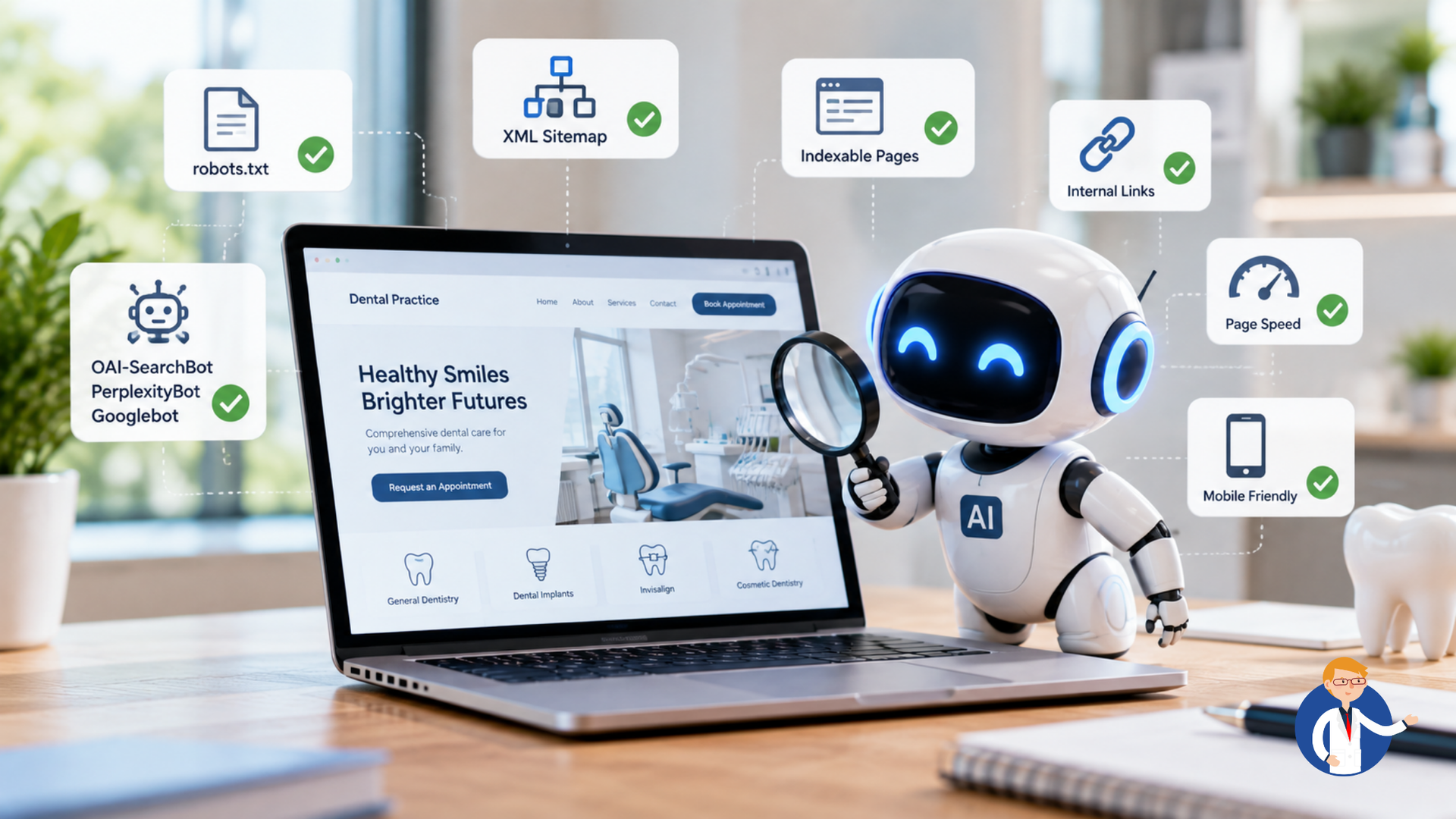
A dental website cannot become visible in AI search if search engines and relevant crawlers cannot properly access its pages.
Start by confirming that important service, location, dentist, and educational pages are indexable. Review the website’s robots.txt file, noindex directives, canonical tags, XML sitemap, internal links, mobile usability, and page-loading performance. Your hosting provider, content delivery network, or security firewall should not accidentally block legitimate search crawlers.
For ChatGPT search visibility, confirm that OAI-SearchBot is permitted to access the website. For Perplexity, review access for PerplexityBot and make sure it is not blocked by robots.txt or firewall rules. Google’s AI search features rely on the same core eligibility requirements as Google Search, so pages generally need to be indexed and eligible to appear with a search snippet.
Google has also clarified that websites do not need a special AI schema or a new machine-readable AI file to appear in AI Overviews or AI Mode. Strong technical SEO and useful content remain in the foundation.
2. Strengthen Your Clinic’s Local Information
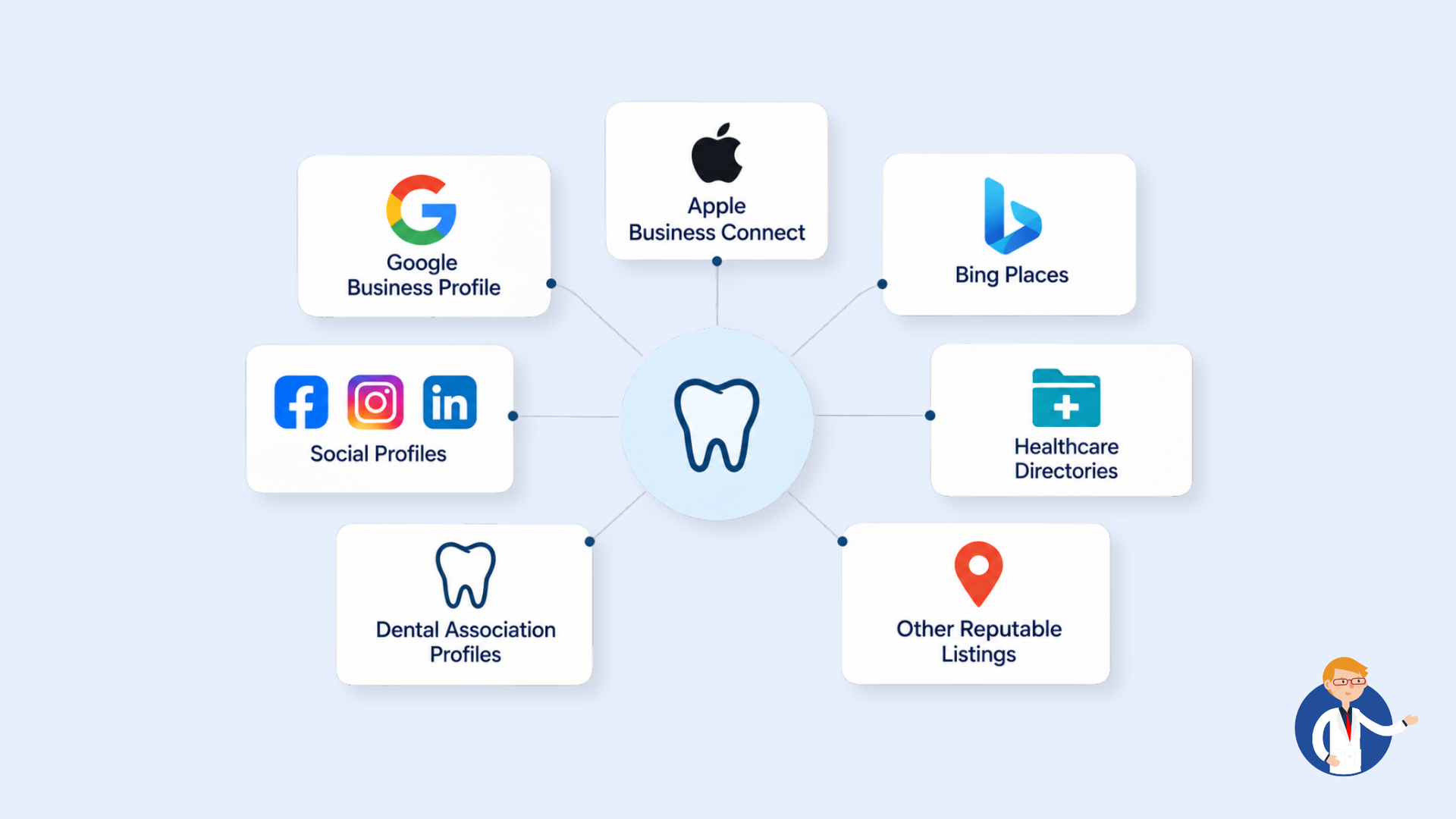
AI platforms need confidence that your dental clinic is a real business serving a specific geographic area. Make your clinic’s core information easy to find and consistent across the web.
Your practice name, address, phone number, office hours, website, services, and location should remain accurate across your Google Business Profile, Apple Business Connect, Bing Places, social profiles, healthcare directories, dental association profiles, and other reputable listings.
Each clinic location should have a dedicated page containing:
- The complete clinic name, address, and contact information
- Accurate hours and appointment information
- Treatments available at that location
- Dentist and clinical team information
- Neighbourhoods or communities genuinely served
- Directions, parking, accessibility, and public transit details
- Original photographs of the office and team
Avoid creating thin pages for every nearby city simply to target more keywords. Location content should help real patients understand whether the clinic is suitable and convenient for them.
A complete Google Business Profile is particularly important for visibility within Google’s ecosystem. Google states that local results are mainly influenced by relevance, distance, and prominence. Accurate categories, services, hours, photographs, and business information help Google understand when a clinic is relevant to a local search.
3. Create Detailed Pages for Individual Dental Services
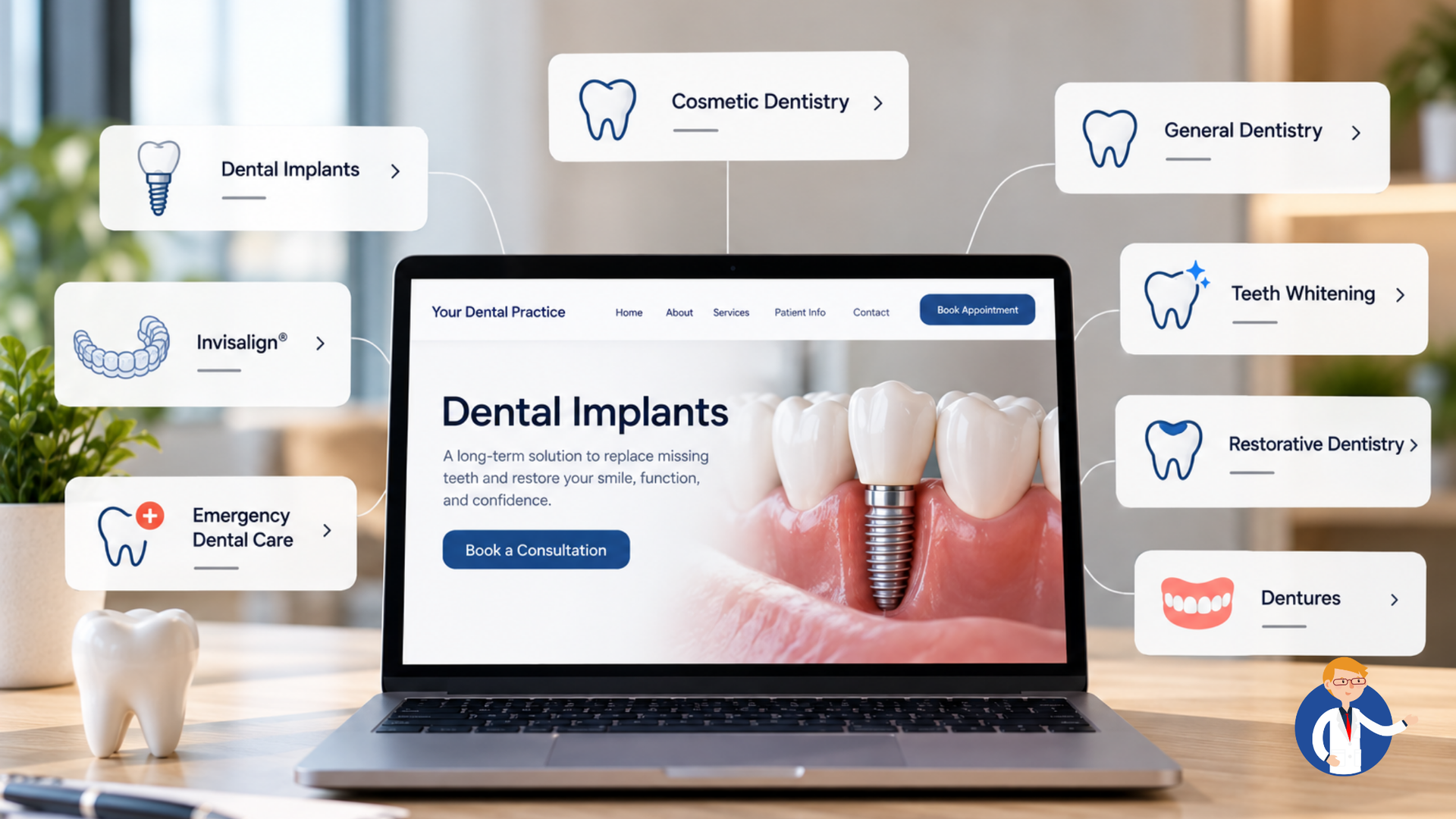
A general services page listing “implants, Invisalign, emergencies, and cosmetic dentistry” does not provide enough information to answer detailed patient questions. Create a focused page for each major treatment offered by the clinic. A dental implant page, for example, should explain:
- What dental implants are
- Which problems they may address
- Who may be a candidate
- What the process generally involves
- Benefits and possible limitations
- Recovery and aftercare considerations
- Factors that affect treatment cost
- Available implant options
- Who provides the treatment
- How to schedule a consultation
This depth creates multiple relevant passages that an AI system can retrieve when answering different questions. It also strengthens traditional organic visibility by covering the patient’s topic more completely.
However, depth should never become a filler. Each section should answer a legitimate question or help a patient make an informed decision.
4. Write Content in a Clear Question-and-Answer Format
People communicate with AI platforms conversationally. Your content should reflect the natural language patients use when asking questions.
Include descriptive headings such as:
- How do I know if I need a root canal?
- Can a dentist treat dental anxiety?
- What should I do during a dental emergency?
- How long does Invisalign treatment take?
- Are dental implants suitable for everyone?
Answer each question directly in the opening sentence or paragraph. Additional explanations can be followed. This structure makes the page easier for patients to scan and gives answer engines a clear passage to interpret.
Use concise definitions, step-by-step explanations, comparison tables, and carefully selected bullet points when they improve understanding. The goal is not to make every page look like an FAQ. The goal is to make important answers clear, complete, and easy to extract without removing necessary clinical contexts.
5. Demonstrate Real Dental Expertise
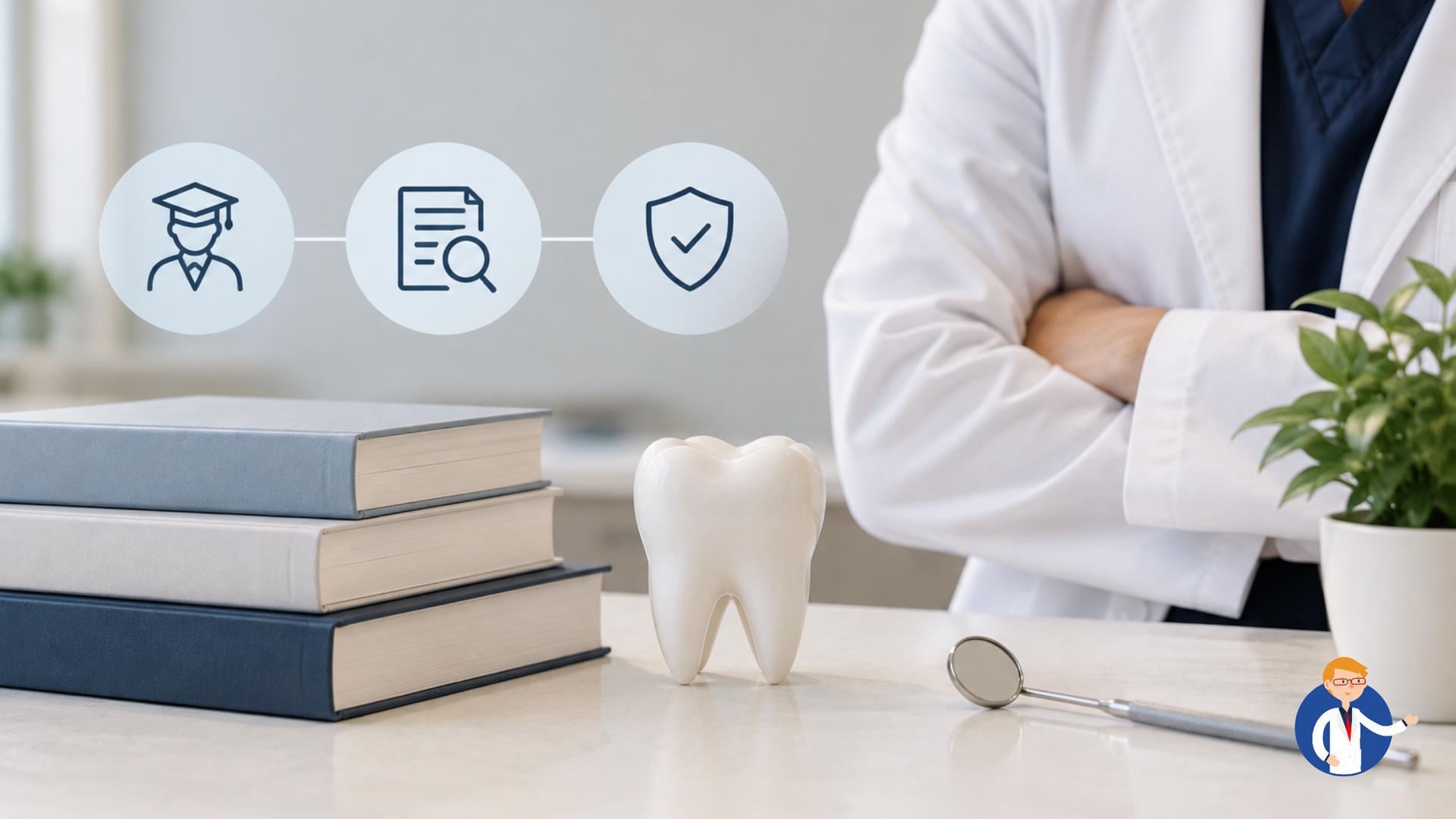
Dental information can influence a person’s health decisions, so accuracy and trust are especially important.
Every clinical article should be reviewed by a qualified dentist or appropriate dental professional. Display the reviewer’s name, credentials, role, and review date. Dentist biography pages should include education, clinical interests, professional memberships, relevant training, languages spoken, and experience that can be verified.
Treatment content should distinguish between general educational information and advice that requires an examination. Avoid guarantees such as “completely painless,” “permanent results,” or “best dentist in the city” unless the statement can be responsibly substantiated.
Support medical claims with dependable sources, such as government health agencies, dental associations, universities, or peer-reviewed research. When appropriate, link to the original source rather than another marketing article that merely repeats the claim.
This gives patients greater confidence and provides AI systems with stronger signals that the content is accountable and evidence based.
6. Add Structured Data That Matches the Page
Structured data helps search engines identify important information on a website. A dental clinic may use relevant schema types for its local business, dentists, services, articles, breadcrumbs, and other eligible page elements.
Schema should accurately reflect information that visitors can see on the page. It should not contain hidden claims, misleading reviews, services the clinic does not provide, or locations where it does not operate.
Structured data does not guarantee that a clinic will be mentioned in an AI response. It does, however, reduce ambiguity and support a clearer understanding of the relationships between the clinic, its dentists, services, articles, and locations.
7. Earn Mentions from Trusted Third-Party Sources
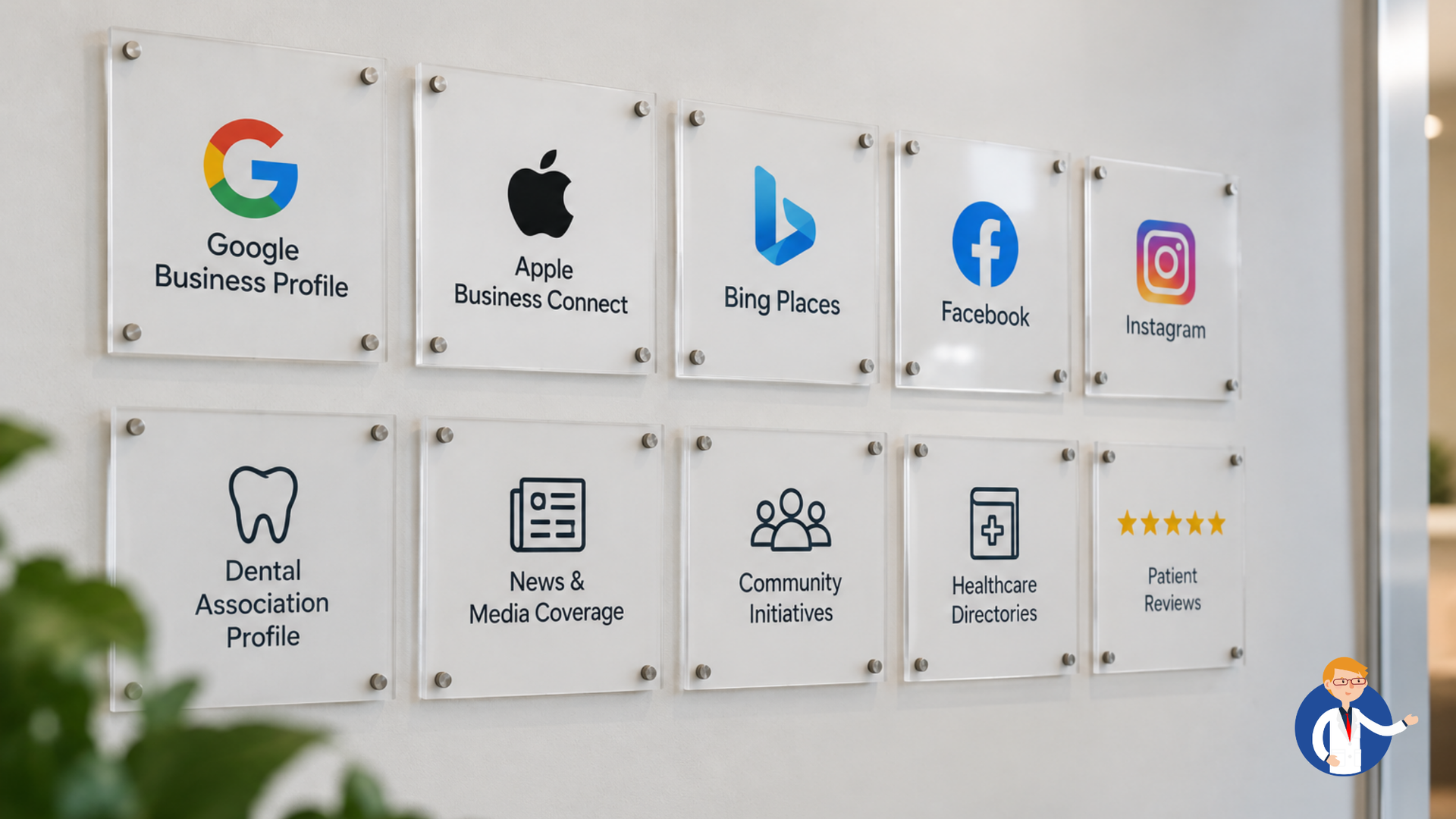
A clinic should not rely exclusively on statements published on its own website. AI systems may compare information across business profiles, directories, professional organizations, news publications, community websites, and other independent sources.
Build legitimate authority by maintaining professional association profiles, participating in community initiatives, contributing expert commentary, earning relevant local coverage, and developing relationships with reputable organizations.
Reviews also contribute to a clinic’s broader online reputation. Encourage patients to leave honest feedback without offering prohibited incentives or pressuring them to use particular wording. Respond professionally while protecting patient privacy. Never confirm that a reviewer is a patient or discloses treatment details in a public response.
The objective is to create consistent, credible evidence that the clinic exists, provide the stated services, and has an established presence in its community.
8. Keep Dental Content Current and Consistent

Outdated content can weaken both patient trust and AI visibility. Review treatment pages, dentist biographies, insurance information, technology descriptions, promotions, and office details regularly.
Display meaningful updates or clinical review dates when content has actually been reviewed. Do not change the date without checking the information. If recommendations, regulations, technologies, or clinic policies have changed, revise the content and record the update appropriately.
Consistency is equally important. If the website lists extended hours, but the business profiles show different hours, AI platforms and patients may have difficulty determining which information is correct.
9. Measure AI Visibility Beyond Traditional Rankings
There is no universal dashboard that captures every mention across ChatGPT, Gemini, and Perplexity. Dental clinics should therefore combine several measurement methods.
Track referral traffic from AI platforms in Google Analytics, including visits attributed to chatgpt.com and perplexity.ai. OpenAI reports that ChatGPT search referral URLs automatically include a utm_source=chatgpt.com parameter, which can help with reporting.
Monitor important patient prompts manually, including service, problem-based, comparison, and local-intent questions. Record whether the clinic is mentioned, linked, or cited, and which competing sources appear.
Continue reviewing Google Search Console for impressions, clicks, indexed pages, and query growth. Google currently includes traffic from AI Overviews and AI Mode within the overall Web search type rather than providing a completely separate AI performance report.
Most importantly, connect visibility to meaningful outcomes such as appointment requests, qualified calls, form submissions, and new-patient leads.
How Dr. Marketing Helps Dental Clinics Improve AI Search Visibility

At Dr. Marketing, we approach AI visibility as an extension of a complete dental marketing strategy, not as an isolated tactic.
Our team can evaluate whether AI and search crawlers can access your website, identify gaps in your service and location content, improve local business information, and develop patient-focused pages that answer real dental questions. We can also strengthen dentist credentials, review schema implementation, improve internal linking, manage local consistency, and create an ongoing content strategy based on the treatments and communities your clinic wants to reach.
We also help dental practices monitor how they appear across emerging search experiences and connect that visibility to website engagement and patient inquiries. No dental marketing agency can guarantee a citation or recommendation from ChatGPT, Gemini, or Perplexity. What we can do is build the technical clarity, local relevance, content quality, and authority that increase your clinic’s eligibility and competitiveness.
Build Visibility Wherever Patients Search
AI platforms are changing how patients research symptoms, compare treatments, and discover local dental providers. Traditional SEO is still essential, but clinics must also make their information easy to answer engines and generative search systems to understand and verify.
The strongest strategy is built on accessible technology, accurate local information, detailed service pages, qualified clinical review, credible external signals, and ongoing measurement. By investing in these areas now, your clinic can strengthen its presence in Google while becoming a more reliable source for Perplexity, Gemini, ChatGPT, and the next generation of patient search.
Dr. Marketing can help your practice create that foundation and turn increased search visibility into informed, qualified patient inquiries.
Ready to grow your dental practice? Let’s talk.
Recent Posts