

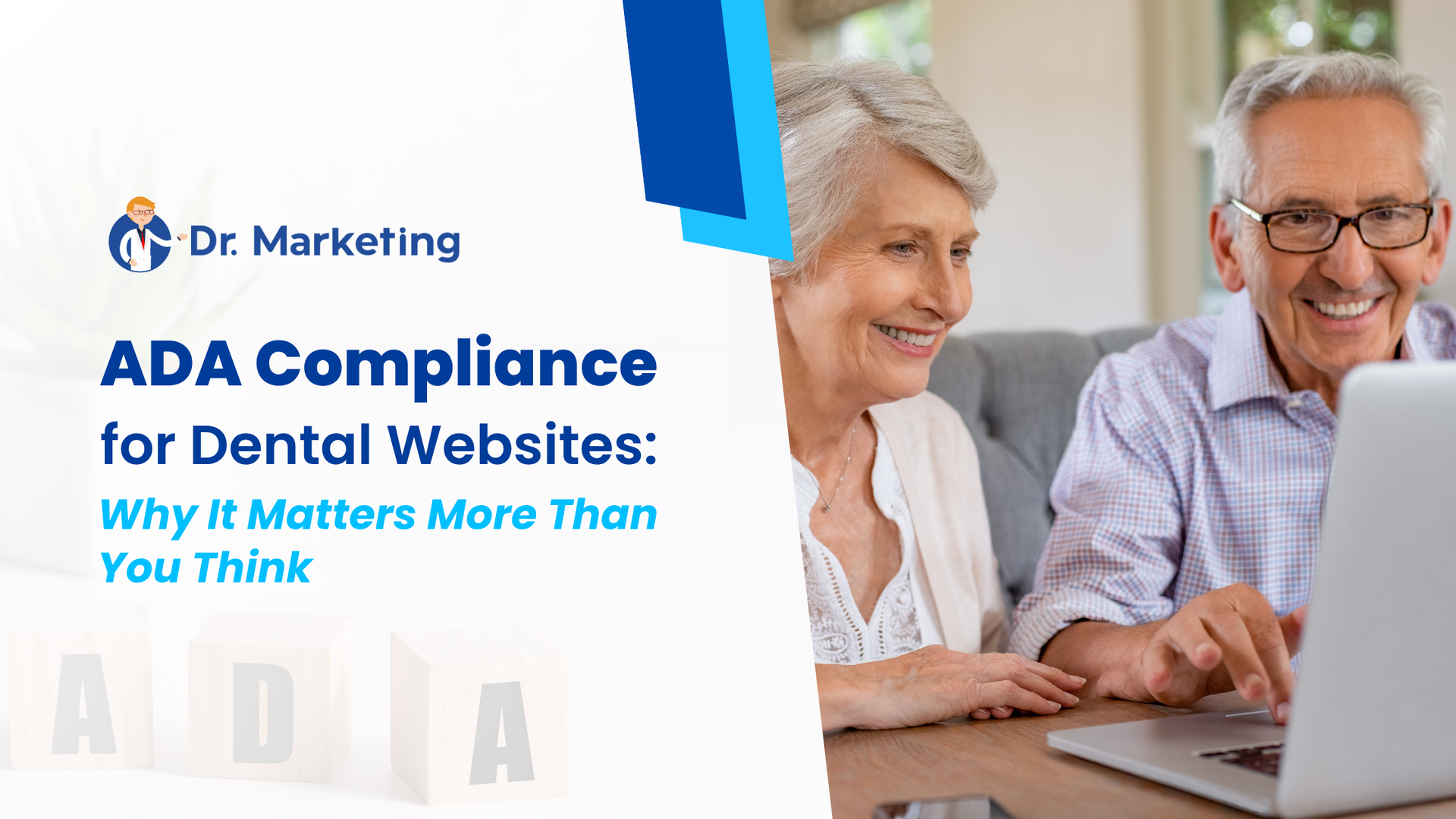
ADA Compliance for Dental Websites: Why It Matters More Than You Think
Source: Dr. Marketing
A dental website today does more than present information. It acts as the first point of interaction for potential patients, shaping how they perceive your practice before they ever make contact. While most practices focus on design, search rankings, and content, accessibility often remains an overlooked part of the conversation.
However, accessibility is quietly becoming one of the most important elements of a high-performing website. It influences how easily visitors can navigate your pages, understand your services, and take the next step. For practices focused on
Patient Acquisition and Dental Practice Growth , this is not a minor detail. It is foundational. At the same time, many providers have turned ADA compliance into an expensive add-on, charging over $100 per month for something that should be straightforward and effective. If that sounds familiar, it may be worth having a quick conversation about better options.
A Closer Look at Accessibility in Everyday Use

Accessibility is no longer optional. It is part of how users experience your brand online. Think about how many different types of visitors land on your website:
- Someone adjusting text size to read comfortably
- Someone is reducing motion to avoid discomfort
- Someone navigating without a mouse
- Someone needing higher contrast to view content clearly
If your website does not adapt to those needs, those visitors will not stay. And when they leave, your marketing efforts lose traction. This is where
accessibility plays a meaningful role in Dental Marketing Strategies. It ensures that the effort invested in SEO for Dentists and Content Marketing for Dentists is fully supported by a
user experience that works for a broader audience.
How Accessibility Features Transform the Experience
Rather than forcing every visitor into the same browsing experience, modern accessibility tools allow users to adjust the website based on what works best for them.
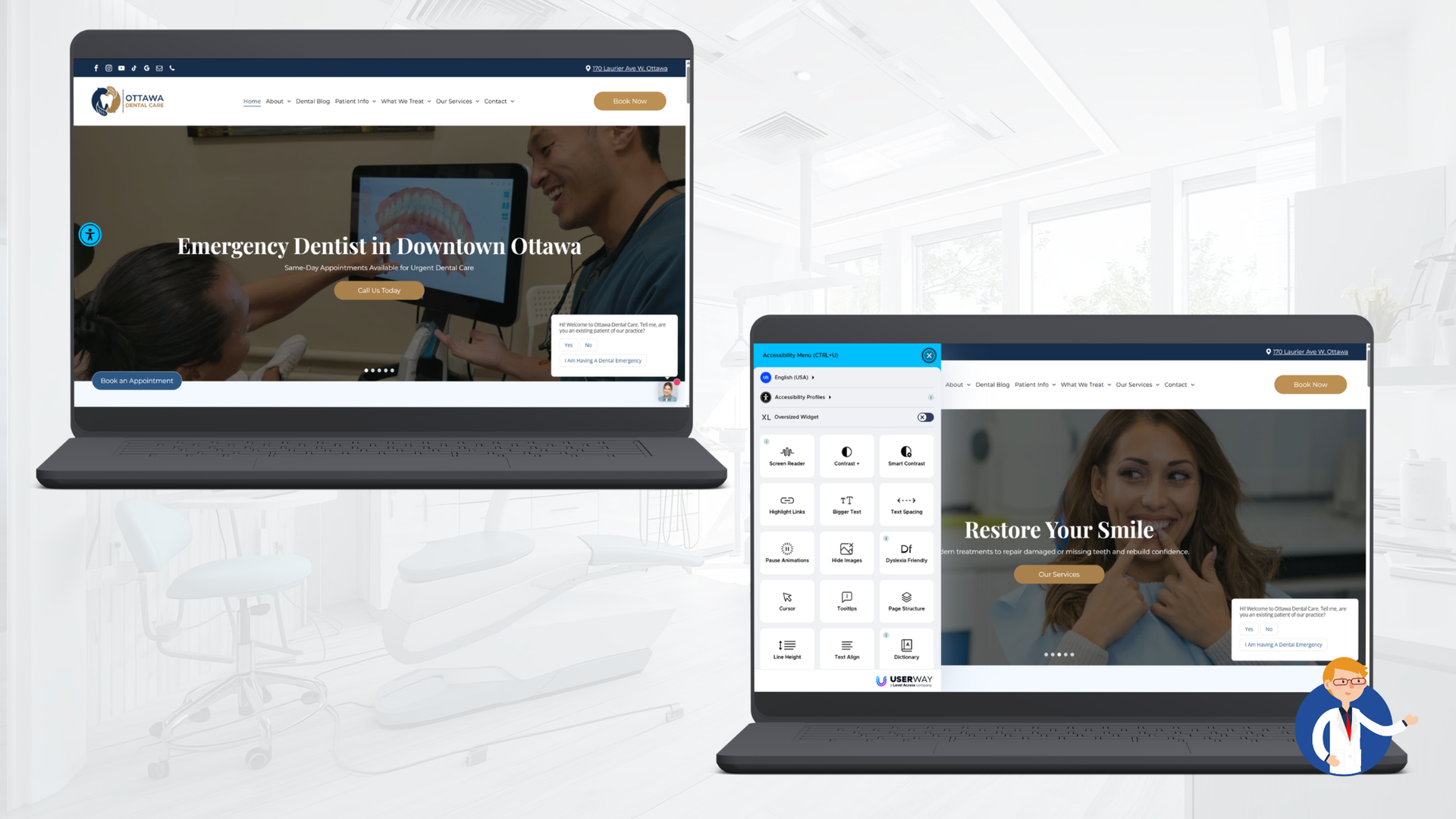
On most accessible dental websites, this feature sits quietly in the corner. It does not interrupt the design, but it is always available when needed. For a visitor who may be struggling to read or navigate, that small icon becomes the entry point to a much more comfortable experience.
With a simple click, visitors can open a panel that introduces a range of viewing and navigation adjustments. Instead of listing features alone, it is more helpful to understand how these changes actually affect what a visitor sees.
For example, someone with low vision may activate a
high-contrast mode. Instantly, the website shifts from a softer color palette to a sharper, more defined layout where text stands out clearly against the background. Headings become easier to distinguish, and buttons are more visible, making navigation far less frustrating. Another visitor might increase
text size and spacing. Paragraphs that once felt dense and difficult to follow become more readable, with clearer separation between lines and sections. This small adjustment can make a significant difference for someone who would otherwise leave the page.
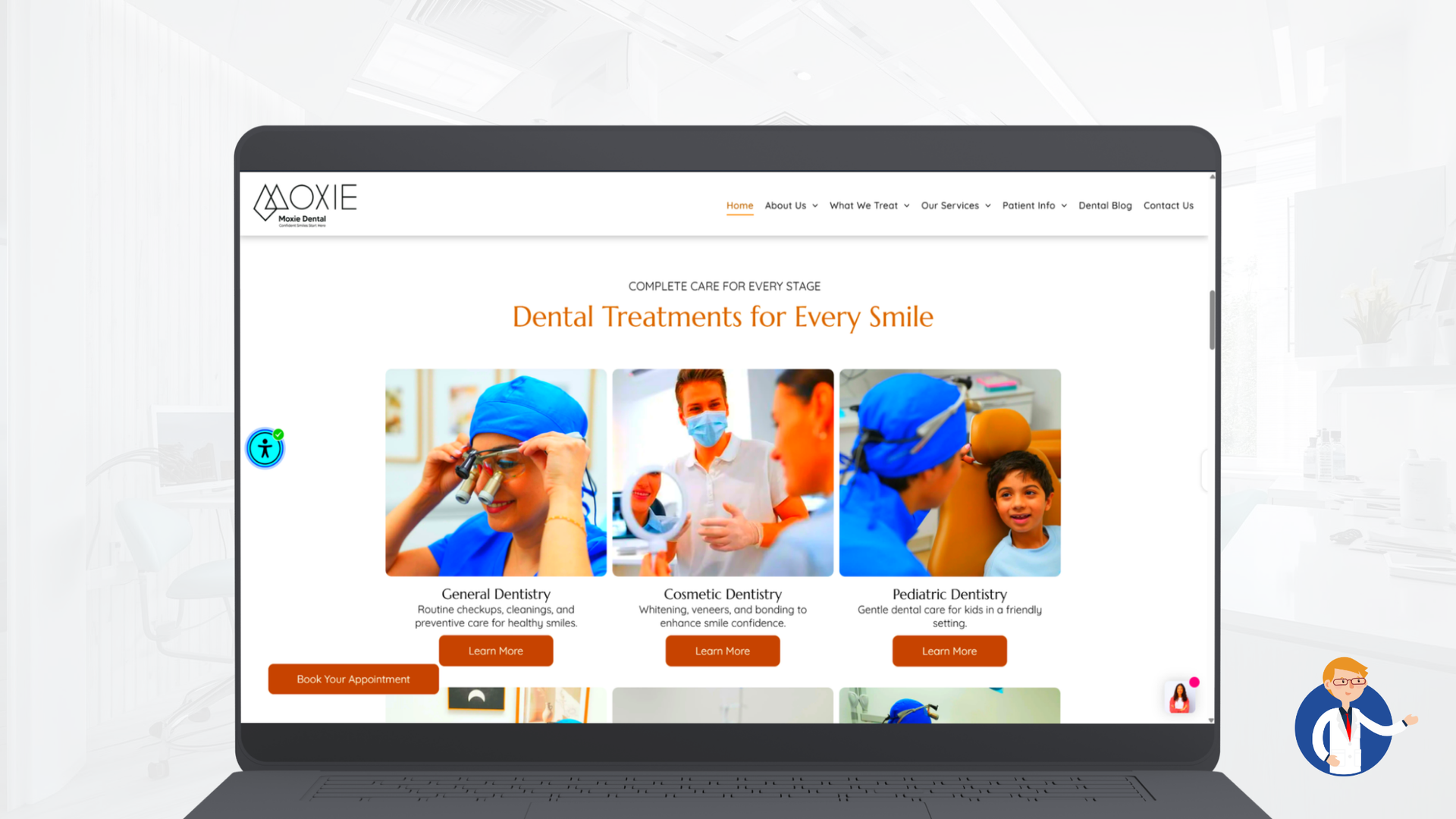
For individuals with
color vision deficiencies , a color-blind accessibility profile adjusts the website’s color palette to improve contrast and distinction. This allows important elements such as buttons, headings, and links to stand out more clearly, making navigation more intuitive and reducing visual confusion.
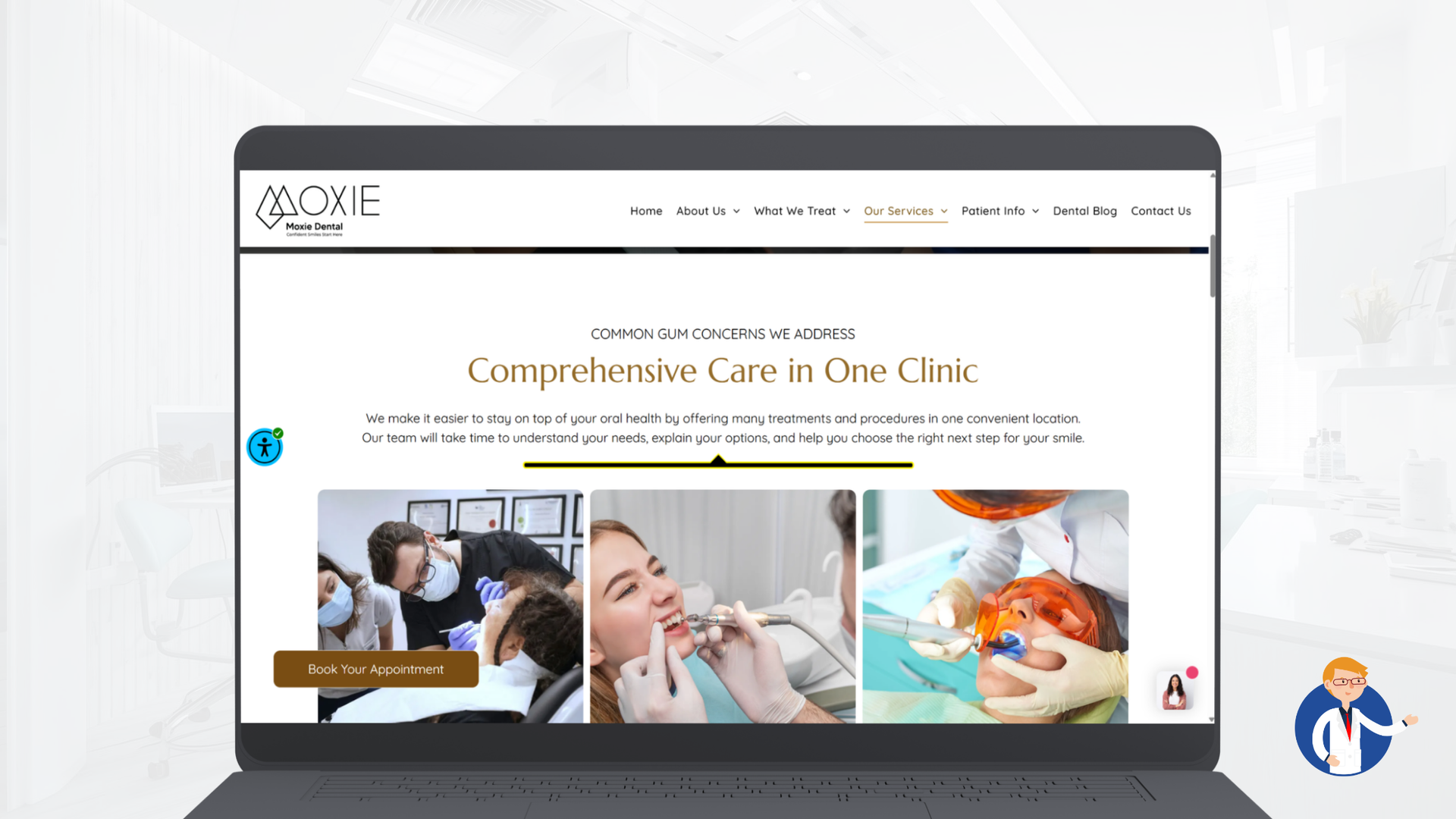
A
cognitive-friendly profile helps simplify the browsing experience for users who may find dense layouts overwhelming. By adjusting spacing, reducing distractions, and improving content clarity, the website becomes easier to follow, allowing visitors to engage with information at a more comfortable pace.
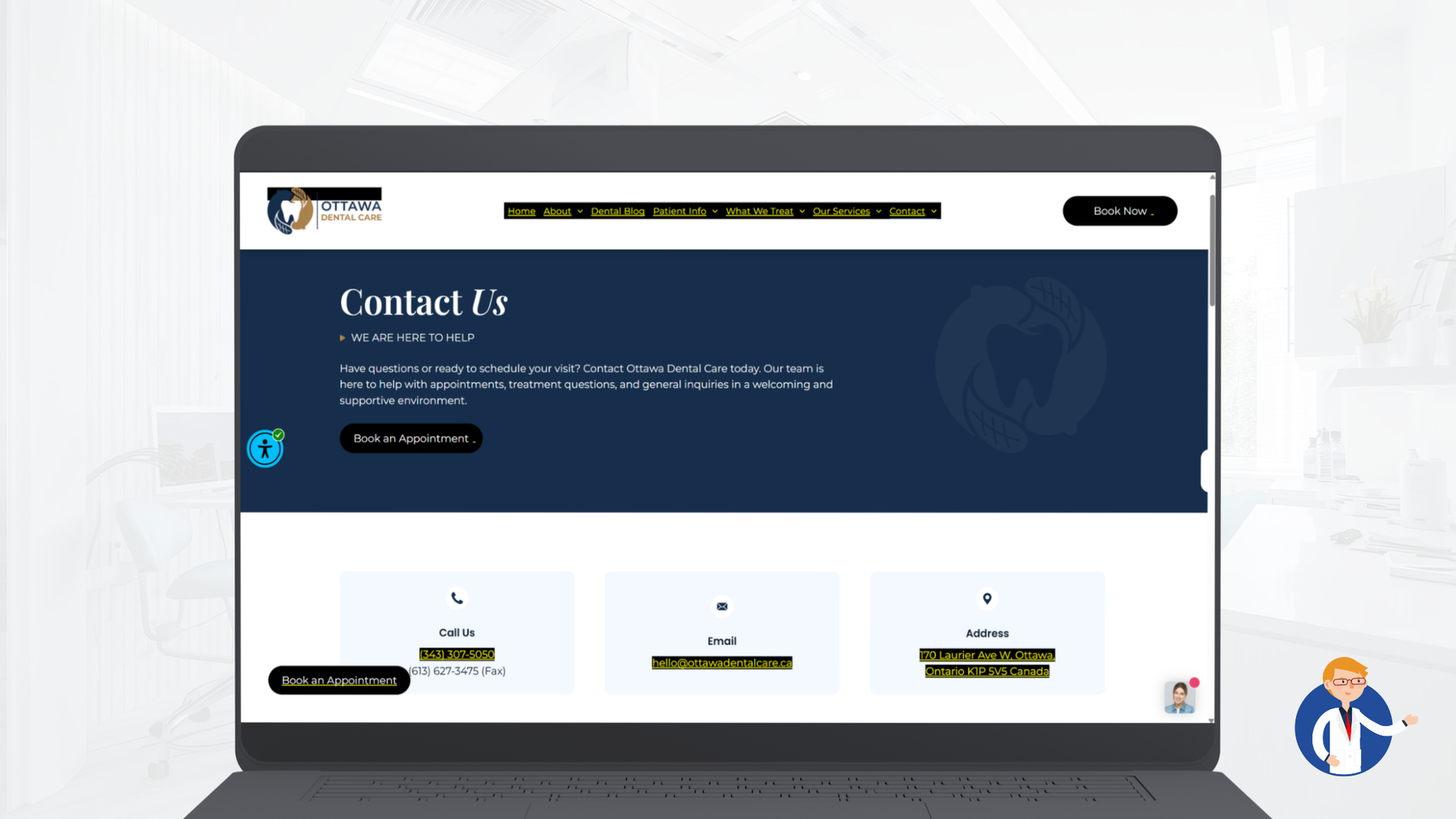
For users who need clearer navigation cues, a highlight links feature makes all clickable elements more visible across the page. Links, buttons, and interactive areas stand out instantly, helping visitors move through the website with greater confidence and ease.
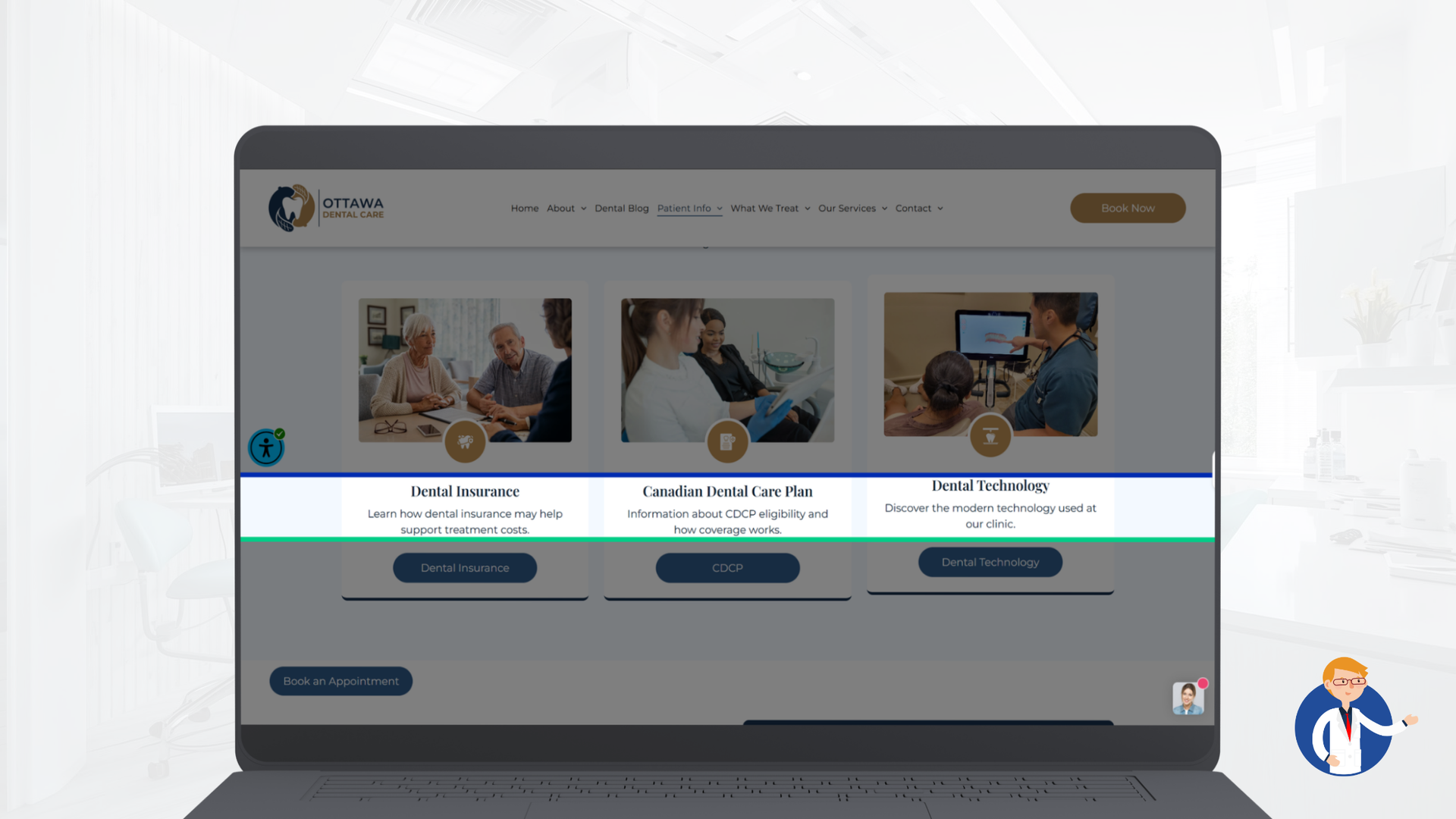
There is also a reading mask tool that allows users to focus on one section of text at a time by dimming the surrounding content. This creates a guided reading experience, making it easier to stay engaged, especially on longer service pages or detailed educational content.
What makes all of this powerful is not just the features themselves,
but how quickly the experience adapts . Within seconds, the same website can feel completely different depending on the user’s needs. There is no need for multiple versions, redesigns, or complicated adjustments. Instead,
accessibility creates a flexible environment where every visitor can interact with your content in a way that works for them . And when that level of usability is in place, it naturally supports stronger engagement, better understanding of your services, and a more comfortable path toward taking the next step.
Why Accessibility Matters Beyond Compliance

Accessibility is often associated with compliance requirements, but its impact goes far beyond that.
When visitors can comfortably engage with your website, they tend to stay longer, explore more, and feel more confident navigating your services . This naturally supports stronger engagement, which plays a role in both Lead Generation for Dental Practices and overall conversion performance. From an SEO for Dentists perspective, these improvements also contribute to better user signals. Search engines prioritize websites that are easy to use, clearly structured, and accessible to a wide audience.
In this way, accessibility becomes part of a larger system that strengthens both visibility and usability.
A More Integrated Approach to Accessibility
In many cases, accessibility is introduced as an additional feature rather than a core part of the website. While this approach can still provide value, the experience is often more effective when accessibility is treated as a natural extension of the website itself.
When it is built into the broader strategy of
Dental Website Design and Online Reputation Management , it feels seamless rather than separate. Visitors do not need to think about it. They simply experience a website that works well for them. For practices reviewing their current setup, this can be a helpful point of consideration. If accessibility feels disconnected, limited, or more costly than expected, it may be worth exploring how it could be implemented in a more streamlined and practical way.
The Cost Conversation, Simplified

Accessibility should support your website’s performance without adding unnecessary complexity to your marketing efforts.
While pricing can vary depending on how a feature is delivered, the focus should always remain on value and effectiveness.
A well-implemented accessibility tool should function smoothly, offer meaningful adjustments, and integrate naturally with your website . If that balance is not being achieved, it often opens the door to reconsider how accessibility fits into your overall Dental Marketing Strategies . In many cases, there are more efficient ways to achieve the same, if not better, results.
Where Accessibility Fits Into Long-Term Growth

A strong dental website is not built on a single feature . It is the result of multiple elements working together, including design, content, SEO, and usability.
Accessibility strengthens each of these areas by ensuring that more visitors can interact with your website without barriers.
It supports a smoother journey from the moment someone lands on your page to the moment they decide to reach out . For practices focused on sustainable growth, this alignment is important. It allows your website to not only attract visitors but also serve them effectively.
Creating a Better Experience Without Overcomplicating It
Accessibility does not need to be a complicated addition to your website. When implemented thoughtfully, it becomes a quiet but powerful enhancement that improves how your site performs every day.
If your current provider is unable to offer accessibility in a way that feels seamless, or if the cost feels disproportionate to the value being delivered, it may be worth having a simple conversation about alternative approaches. At Dr. Marketing,
accessibility is approached as part of a complete strategy that supports Dental Website Design, SEO for dentists, and lead generation for Dental Practices , ensuring that your website works well for every visitor who lands on it.
Let’s Make Your Website Work Better for Every Visitor
If your current provider is unable to implement accessibility effectively, or if you are paying more than $100 per month for it, there are better ways to approach it.
Dr. Marketing focuses on building websites that are accessible, optimized, and designed to support real growth .
Sometimes, improving performance is not about adding more tools. It is about choosing the right ones.
Connect with our team today and see how quickly your website can be upgraded.
Ready to grow your dental practice? Let’s talk.
Recent Posts