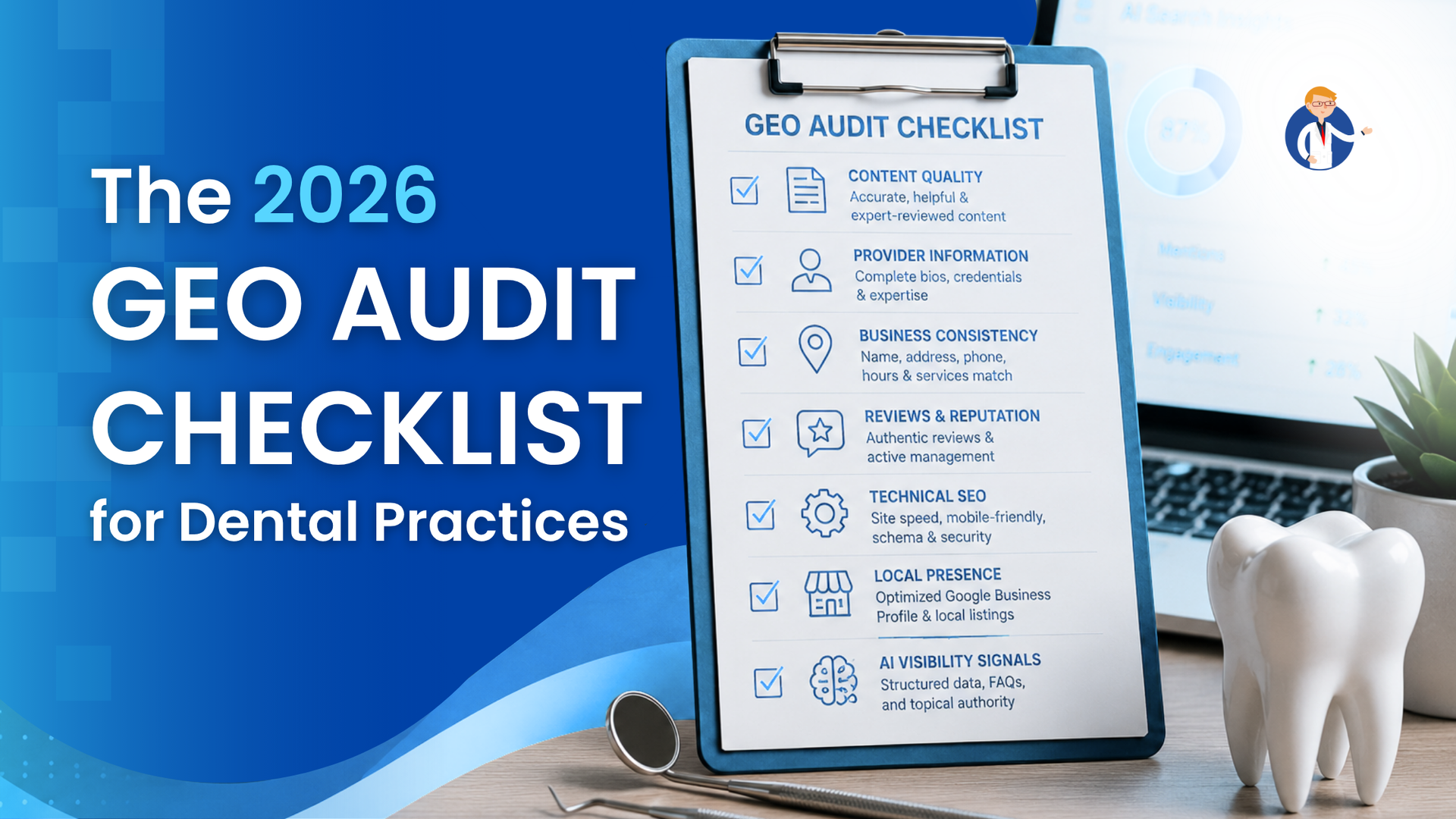
Tips on How to Choose a Domain Name for Your Dental Practice in the USA and Canada
Source: Dr. Marketing
When a dental practice in the United States or Canada reaches out to us for marketing support, the conversation usually begins with familiar goals. More new patients. Better visibility in local search. A website that reflects the quality of care they provide. But very early in the process, we ask a question that often surprises dentists on both sides of the border.
What domain name are you using?

Sometimes the answer is clear and confident. Other times, there is hesitation, followed by a domain name that feels dated, overly long, or disconnected from how the dental practice operates today. In many cases, that domain was registered years ago during a busy startup phase, chosen quickly without much strategic thought. Yet choosing a domain name for a dental practice in the USA or Canada is far more than a technical task. It is a foundational branding decision. Your domain name becomes the anchor for your dental website, your local SEO strategy, your online advertising, and how patients remember and refer your practice within their community.
This guide explains how dentists and dental clinics across the United States and Canada can choose a domain name that supports long-term growth, builds trust with patients, and aligns with modern dental marketing strategies.
The First Impression Patients Never Forget

Dentists often think of a domain name as just the address of their website. In reality, it plays a role in nearly every aspect of dental marketing, especially in competitive markets throughout the USA and Canada. Your dental domain name influences how search engines interpret relevance, how often patients click your listing in Google search results, and how trustworthy your practice appears in online ads and email campaigns. It also affects word-of-mouth referrals. A domain that is easy to say and easy to remember travels much further when patients recommend you to family and friends.
In both American and Canadian dental markets, a strong domain works quietly behind the scenes, supporting SEO, paid advertising, and branding. A weak domain creates friction that every marketing effort must work harder to overcome.
A Story We See Repeatedly in Both Countries
We once worked with a dental clinic in North America that had outstanding patient reviews, modern technology, and experienced dentists. Yet their website traffic was underperforming compared to similar practices in their city. After reviewing their marketing, the issue became clear. Their domain name was long, included multiple hyphens, and relied on an abbreviation that made sense internally but confused patients. People mistyped the URL frequently, and paid ads showed lower click-through rates because the domain did not look familiar or trustworthy.
After switching to a simpler, dental-focused domain, their online performance improved within months. Traffic increased. Ad engagement improved. Patients mentioned finding the website more easily. Nothing else changed. The only difference was the domain name. This experience is one reason why dentists in the USA and Canada frequently ask us how to choose a domain name that will not limit their marketing efforts.

Start with Simplicity and Clarity
The most effective dental domain names, whether for practices in the United States or Canada, share one core quality. They are simple. A good domain name should be easy to read, easy to say out loud, and easy to type without explanation. If a patient hears it once, they should be able to recall it later. This is especially important in multicultural and multilingual communities common across Canadian and American cities. When choosing a domain name for your dental practice, clarity should always come before creativity. Clever wordplay may feel appealing internally, but patients respond far better to names that clearly communicate that you are a dentist or dental clinic.
Using Dental Keywords Without Overdoing It
Including a dental keyword in your domain name can reinforce relevance for both patients and search engines in the USA and Canada. Words such as dental, dentist, family dental, cosmetic dental, or implant dentist can help establish immediate context.
However, keywords should support your domain name, not overwhelm it.
A domain like MapleRidgeDental.com strikes a balance between branding and clarity. Overloading a domain with multiple keywords makes it harder to remember and can reduce trust. Search engines today prioritize quality content, location signals, and user experience over exact match domain names. When learning how to choose a domain name, dentists should focus on creating a strong, brand-friendly URL that supports SEO rather than trying to force rankings through keywords alone.
Brand Name or Location-Based Domain for North American Practices
Whether a patient is searching for a dentist in Chicago, Toronto, Vancouver, or Dallas, the behavior is remarkably similar. They type a search, scan the results, and pause briefly before clicking.
That pause matters.
In that moment, your domain name answers several unspoken questions. Does this look like a legitimate dental practice? Does it feel professional and established? Is it easy to remember? Can I trust this website?
A domain such as BrightOakDental.com communicates clarity immediately, regardless of whether the practice is in the USA or Canada. It feels professional, recognizable, and straightforward. On the other hand, a long or confusing domain with hyphens, numbers, or unclear abbreviations introduces hesitation before the website even loads. Before patients in the United States or Canada evaluate your services or read your reviews, your domain name shapes their perception. As a dental marketing agency working across both markets, we consistently see stronger performance from practices with clean, simple domain names.
Why Domain Names Matter in Dental Marketing Across the USA and Canada

Dentists often ask whether they should use their practice name or their city in the domain. There is no single correct answer, but the choice should be intentional.
Brand Based Domains
Brand-based domains are ideal if you are building a long-term identity or plan to grow beyond one provider. Examples:
- LakesideDental.com
- EvergreenDentalCare.com
These domains allow flexibility if you add associates, expand services, or relocate within the same region.
Location-Based Domains
Location-based domains can be helpful for newer practices or highly competitive areas. Examples:
- DentistInScarborough.com
- VancouverFamilyDental.com
If your practice name already includes a city or geographic term, you usually do not need to repeat it in the domain.
Why Hyphens and Numbers Hurt Dental Branding
Hyphens and numbers consistently create confusion for dental practices in both American and Canadian markets. Patients forget where hyphens belong, misinterpret numbers when spoken aloud, and are more likely to mistype the URL. From a branding and trust standpoint, clean domains without extra characters always perform better. When deciding how to choose a domain name, simplicity is almost always the safer choice.
Choosing the Right Domain Extension in the USA and Canada

For dental practices, the .com extension remains the gold standard.
Patients instinctively trust .com domains and often default to them when typing URLs. While extensions like .dental or .clinic are available, they introduce friction. We often see patients accidentally type .com even when a practice uses another extension. That alone can lead to lost traffic.
If your preferred .com domain is unavailable, it is usually better to adjust the name slightly than to choose a less familiar extension.
Thinking Beyond Today’s Dental Practice
One of the most common mistakes dentists make when choosing a domain name is focusing only on their current situation. A domain that fits today may limit growth tomorrow. Practices in the USA and Canada often evolve by adding associates, expanding services, or relocating within the same region. A domain that is too specific to one dentist or one narrow service can become restrictive over time. Choosing a flexible domain allows your practice to grow without forcing a rebrand.
Protecting Your Dental Brand Online
Once your primary domain is selected, securing common variations can help protect your brand. Misspellings, plural versions, and shortened forms can redirect to your main site and prevent confusion. This small step is particularly valuable in competitive dental markets across the United States and Canada.
What Years of Working with Dental Practices in the USA and Canada Have Taught Us About Domain Names

After years of working with dental practices across the USA and Canada, one lesson consistently stands out. Practices that choose their domain name strategically experience fewer marketing challenges over time. Those who rush the decision often revisit it later, once performance issues appear.
The strongest dental domain names are not trendy or clever. They are clear, trustworthy, and built to last. They support SEO, advertising, and branding quietly in the background while allowing the practice to grow.
Choosing the right domain name for your dental practice is not about short-term trends. It is about creating a foundation that supports visibility, trust, and long-term success in both the American and Canadian dental markets.